Why Choose Food Production Line Equipment for Your Business?

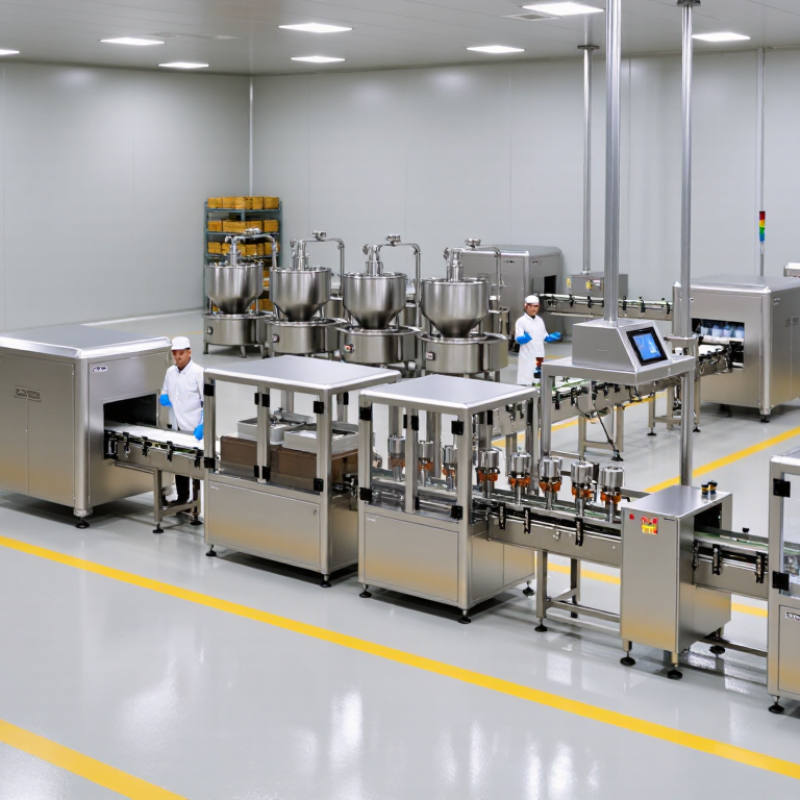
Why choose food production line equipment for your business? The answer begins with control, not simply speed. A well-designed line connects weighing, mixing, filling, sealing, inspection, and cleaning. Each stage can reduce handling errors and create a clearer production record. Operators see practical benefits on the factory floor: fewer manual transfers, steadier portion sizes, and faster changeovers between products.

The Food and Agriculture Organization reports that approximately 13.2% of food is lost after harvest and before retail globally. Better processing controls cannot solve every loss, but they can limit avoidable waste inside a plant. Sensors can identify temperature changes, while checkweighers can detect inconsistent portions. The PMMI report, 2024 Trends in Food and Beverage Processing, also highlights automation, labor efficiency, and data visibility as major investment priorities. These findings support a careful move toward food production line equipment, especially where demand is rising and skilled labor remains limited.

The investment still requires judgment. No line is perfect. A fast machine may create difficult cleaning procedures or expensive maintenance if poorly specified. That assumption can be wrong. Businesses should compare throughput, product texture, sanitation access, energy use, spare-part availability, and operator training. The European Hygienic Engineering & Design Group emphasizes hygienic design as a foundation for safe food processing. In practice, stainless-steel surfaces, accessible seals, and documented cleaning steps matter more than impressive output claims. Reliable equipment should fit the product, facility, and team. It should also leave room for future changes, because today’s bestselling product may not remain tomorrow’s priority.
Why Choose Food Production Line Equipment for Your Business?

Understanding Food Production Line Equipment and Its Main Functions

Food production line equipment connects several tasks into one controlled workflow.

It may receive raw ingredients, wash vegetables, cut portions, mix recipes, cook products, and fill containers. Conveyors move materials between stations with less manual handling. Sensors can monitor temperature, weight, speed, and filling levels. These functions help reduce variation between batches.

In daily production, reliable equipment must support hygiene and traceability.

Smooth stainless-steel surfaces are easier to clean. Drainage design helps prevent standing water near processing areas. Operators should check belt tension, cooking temperatures, sealing pressure, and sensor accuracy. Small errors can affect an entire batch. They can also create unnecessary waste. Cleaning schedules and documented inspections provide practical evidence of control.

Choosing a production line should match the product, factory space, and expected output.

A modular setup can allow future expansion without replacing every station. Automatic filling may improve portion accuracy, while controlled cooking can protect texture and food safety. Still, automation is not a complete solution.

Poor recipes, weak maintenance, or rushed sanitation will remain problems. I have seen efficient lines perform poorly when staff training was overlooked.

Human judgment still matters during changeovers, unusual sounds, and unexpected product results. The right equipment supports skilled workers; it does not remove their responsibility.
Assessing Your Business Needs and Production Requirements

Why Choose Food Production Line Equipment for Your Business?

Assessing Your Business Needs and Production Requirements

Choosing food production line equipment starts with an honest assessment of your operation. A small bakery producing 800 loaves daily needs different machinery from a central kitchen making 8,000 meals. Record current output, peak demand, product sizes, and available floor space before contacting suppliers. Measure twice. Include water pressure, electrical capacity, drainage, ventilation, and cold storage limits. These details often expose hidden installation costs.

Your process map should show every stage, from ingredient receiving to sealed packaging. Identify where workers lift trays, wait for ovens, or clean equipment between recipes. In practice, the slowest station controls the whole line. A faster mixer cannot solve a packaging bottleneck. Select equipment that matches batch size, temperature range, changeover frequency, and target speed. Do not rely on advertised maximum output. Real production includes loading gaps, cleaning, adjustments, and occasional rejects. Pilot testing is valuable.

Ask for test runs using your actual ingredients, containers, and recipes. Check product consistency, waste levels, operator safety, and cleaning time. Equipment should support documented hygiene procedures and applicable food safety requirements. Consider access panels, spare parts, training, and maintenance response before approving the layout. Efficient lines can still fail when staff cannot reach a sensor or drain. That practical weakness deserves attention. Leave room for growth, but avoid paying for capacity you cannot use. A careful assessment may reveal that one flexible machine suits your needs better than a fully automated line.

Why Choose Food Production Line Equipment for Your Business? - Assessing Your Business Needs and Production Requirements

Assessment Dimension Typical Planning Data Why It Matters Questions to Assess Your Business Equipment Planning Implication
Production Capacity Required output may range from 100 kg/hour for small operations to more than 1,000 kg/hour for larger facilities. Capacity determines the size, speed and number of machines required to meet demand without creating bottlenecks. What is the current hourly output? What peak volume is expected during seasonal or promotional demand? Select a line with sufficient rated capacity and a practical allowance for growth and routine downtime.
Product Type Products may be liquid, semi-solid, powdered, fresh, frozen, baked or ready-to-eat. Viscosity, particle size, moisture level and temperature affect conveying, mixing, filling and packaging performance. Does the product contain particulates? Is it sensitive to heat, shear, oxygen or contamination? Match pumps, mixers, fillers, conveyors and contact surfaces to the product’s physical properties.
SKU Variety A line may handle one product continuously or several recipes, formats and package sizes. Frequent product changes can increase cleaning time, setup labor and material waste. How many products and package sizes must the line process each week? How often will changeovers occur? Consider adjustable equipment, recipe controls, quick-release components and changeover-friendly layouts.
Food Safety and Hygiene Food-contact equipment commonly uses corrosion-resistant stainless steel and hygienic, cleanable designs. Sanitary construction helps reduce contamination risks and supports documented cleaning procedures. What are the applicable food-safety regulations? Which parts require inspection, sanitation or allergen controls? Specify smooth surfaces, accessible components, suitable seals and hygienic drainage where applicable.
Automation Level Options range from manual workstations to semi-automated and fully integrated lines. Automation can improve consistency, throughput and traceability, but it requires capital, training and maintenance. Which tasks are labor-intensive, repetitive or difficult to perform consistently? Automate high-volume repetitive steps first while retaining flexibility for products that need manual handling.
Available Floor Space The layout must accommodate processing, packaging, storage, maintenance access and safe personnel movement. Insufficient space can restrict material flow, reduce sanitation access and make future expansion difficult. What are the room dimensions, ceiling height, utility locations and required separation between process areas? Create a scaled layout before purchasing and include clearance for cleaning, inspection and repairs.
Packaging Format Common formats include pouches, trays, jars, cans, bottles, cartons and flexible bags. The package affects filling accuracy, sealing method, labeling, inspection and downstream handling. What are the package dimensions, target weight, seal requirements and expected speed? Choose compatible filling, sealing, coding, labeling and case-packing equipment.
Utilities Typical requirements may include electrical power, compressed air, water, drainage, refrigeration or steam. Inadequate utilities can limit line performance and cause unplanned interruptions. What voltage, air pressure, water quality, drainage capacity and temperature-control services are available? Confirm utility loads and connection points during the design stage, not after installation.
Labor Availability Labor needs depend on automation, product handling, quality checks, sanitation and packaging complexity. Equipment should reflect the skills available for operation, troubleshooting and preventive maintenance. How many operators are available per shift? What training and technical support can be provided? Prioritize intuitive controls, clear work instructions, guarding and accessible maintenance points.
Total Cost of Ownership Costs include purchase, installation, utilities, labor, sanitation, spare parts, maintenance and downtime. A lower purchase price may not produce the lowest long-term operating cost. What is the available capital budget? What payback period and operating-cost targets are acceptable? Compare alternatives using capacity, labor savings, energy use, maintenance and expected service life.
Scalability Demand forecasts should cover current production and expected growth over the next several years. A modular line can reduce the risk of replacing major equipment when demand increases. Will production volume, product range or packaging requirements change in the foreseeable future? Allow space and control-system capacity for additional modules, conveyors or packaging stations.
Planning Note: Use actual production records, product specifications, utility surveys and layout measurements to validate these planning benchmarks before selecting food production line equipment.

Key Benefits of Using an Integrated Food Production Line

Integrated food production lines connect preparation, processing, filling, sealing, and inspection in one controlled workflow. This reduces unnecessary transfers between separate machines. Fewer transfers can mean less handling, lower contamination risk, and more consistent output. In a working plant, operators can monitor material flow from a central control panel. Sensors track temperature, speed, pressure, and product weight. These records support traceability and help teams investigate quality issues quickly.

The practical benefit is steadier production. A synchronized line can reduce waiting time between cooking and packaging. It may also lower labor demands for repetitive tasks. Operators spend more time checking sanitation, equipment settings, and product appearance. A well-designed line saves floor space, too. However, integration is not automatically better. Poor layout, difficult cleaning points, or unsuitable conveyor speeds can create new delays. This is where process experience matters.

Before selecting equipment, production managers should test the line with actual ingredients and packaging formats. Sticky sauces, fragile vegetables, and uneven pieces behave differently. Trial runs reveal problems that brochures often miss. Staff should also review cleaning access, spare-part availability, energy use, and changeover time. A reliable integrated system must fit the recipe, workforce, facility, and food safety plan. Small compromises may remain. They deserve honest attention before installation.

Why Choose an Integrated Food Production Line?

Integrated food production lines connect processing, weighing, filling, sealing, inspection and packaging in one coordinated workflow. This helps manufacturers improve process control, reduce handling points and respond more effectively to food-loss risks across the supply chain.

The chart uses global estimates reported by the Food and Agriculture Organization of the United Nations and the United Nations Environment Programme. Food loss refers to losses before retail, while food waste occurs at retail, food-service and household stages.

Selecting Equipment for Product Quality, Safety, and Efficiency

Choosing food production line equipment is not only about speed. It directly affects product quality, worker safety, and daily operating efficiency.

In my experience, consistent quality begins with controlled handling. Equipment should maintain stable temperatures, accurate filling volumes, and gentle product movement. Uneven heating can change texture, while inaccurate dosing creates waste and dissatisfied customers. Stainless steel contact surfaces, smooth welds, and accessible components also make cleaning more reliable. Small design details matter.

Safety requires more than protective guards. Operators need clear controls, emergency stops, and simple maintenance procedures. Sanitation records should identify cleaning times, responsible staff, and inspection results. Batch tracking and routine calibration support dependable production decisions. These records also help teams investigate problems before they become repeated failures.

Efficiency comes from practical workflow design. Materials should move logically, without unnecessary lifting or waiting. Sensors can reduce manual checks, but they still need regular testing. Automation is useful, not magical. I have seen efficient lines lose time because changeovers were poorly planned. A short trial run can reveal difficult access points, excessive noise, or cleaning delays. Equipment selection should consider these real working conditions, not only its advertised capacity.

Planning Installation, Operation, Maintenance, and Future Expansion

Choosing food production line equipment is not only a purchasing decision. It is a long-term operating plan.

Planning should begin with product viscosity, target capacity, cleaning methods, floor drainage, and utility limits. A narrow aisle can complicate maintenance. The FAO’s State of Food and Agriculture 2019 estimates that 14% of food is lost between harvest and retail. Hygienic layouts, accurate filling, and controlled transfers can reduce avoidable waste, though results depend on staff discipline. Before installation, request utility drawings, anchor points, guarding details, and a documented factory acceptance test. Leave space around pumps and sensors. Future access matters.

During commissioning, operators should test production, changeovers, sanitation, alarms, and emergency stops. Use short work instructions beside the controls. The U.S. Department of Energy reports that motor-driven systems consume about 68% of industrial electricity in U.S. manufacturing. Efficient motors help, but poor scheduling and compressed-air leaks can erase those gains. Record speed, temperature, pressure, rejects, and cleaning time from day one. Numbers expose small problems early.

Maintenance needs ownership, not only spare parts. McKinsey reports that predictive maintenance can reduce machine downtime by 30–50% and maintenance costs by 20–30%. These figures are not guarantees; sensor quality, training, and data interpretation matter. I have seen teams overdesign expansion plans and underfund basic maintenance. That is an expensive mistake. Reserve electrical capacity, safe service access, modular conveyors, and validated recipes for future growth. Review the line quarterly, because real production rarely follows the original spreadsheet.