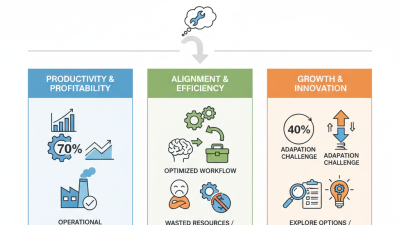
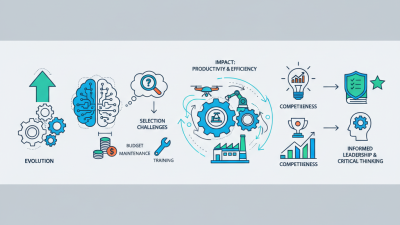
Choosing the right machinery and equipment is less about buying the biggest machine and more about matching capacity to real work. A packaging line running eight hours daily has different needs from one facing seasonal peaks. Start with the task, material, required output, available floor space, and operator skill. Small details matter. A narrow access gap, a noisy bearing, or an awkward cleaning point can affect daily use more than a headline speed figure.
W. Edwards Deming, a leading manufacturing quality expert, wrote, “It is not enough to do your best; you must know what to do, and then do your best.” His principle is useful here: define performance requirements before comparing machines. This guide examines capacity, total ownership costs, reliability, safety features, maintenance access, supplier support, and future flexibility. Compare energy use, spare-part lead times, installation needs, and training—not just purchase prices. Request a demonstration with your actual material when possible. Check references from businesses with similar workloads, then test assumptions against operating data.
No choice is perfect. A spreadsheet can miss an operator’s daily frustration, and a sales estimate may not match your shift pattern. That deserves a second look. The aim is a defensible decision: equipment that meets today’s needs, can be serviced responsibly, and leaves room for realistic growth.
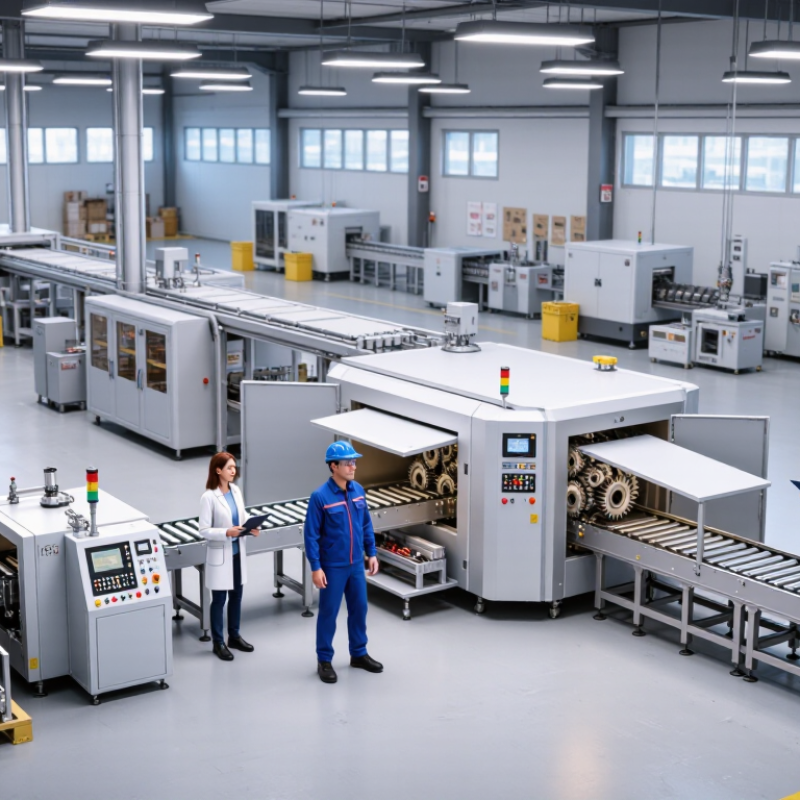
Choosing machinery begins with a clear process need, not a catalogue speed. Define the product, acceptable quality limits, changeover frequency, and expected shift pattern. Measure the real cycle. A line making 600 good units during a 7.5-hour shift needs at least 80 good units per hour. At 85% OEE, the equipment must support roughly 94 units per planned hour. That allowance accounts for availability, performance losses, and quality defects. It is a planning benchmark, not a promise.
Check the slowest station under realistic operating conditions. A fast filler cannot compensate for a slower labeler or frequent manual checks. Not just nameplate speed. Ask operators to record minor stops, cleaning time, and rejected pieces during a representative shift; these often disappear from supplier estimates. Compare actual results with the 85% target across several product runs, especially after changeovers. If demand varies, test both peak and average workloads before fixing capacity. This estimate will still be imperfect: early production data may expose constraints that a short factory trial missed. Leave room for maintenance access and modest demand growth, but avoid buying excess capacity that sits idle.
How to Choose the Right Machinery and Equipment?
Compare Machine Specifications, Duty Cycles, and IEC 60034-30-1 IE Classes
A motor’s headline power rating does not tell the whole story. Compare rated output, voltage, speed, torque, enclosure, and cooling method against the machine’s actual workload. A conveyor moving steadily may need different performance from a mixer that starts under load. Check the operating hours, too. Small mismatches can become costly over years of use.
Duty cycle matters. Identify whether operation is continuous or intermittent, and record how often the motor starts, stops, or faces peak loads. IEC 60034-30-1 defines IE efficiency classes for specified types of motors. Compare IE classes only when the motors’ ratings and operating conditions are comparable. Higher efficiency can reduce energy use, but it does not automatically mean a better fit. A motor that runs hot or struggles at the real load may disappoint.
Use measured site data where possible, including current, load, and daily run time. A simple spreadsheet helps, but it can miss losses during frequent starts. I have seen estimates look convincing until actual operating patterns were checked. Revisit the assumptions. Ask a qualified engineer to verify the selection, especially when duty cycles are irregular or the motor operates near its limits.
| Equipment example | Typical load profile | Representative motor specification | Duty cycle | IE-class selection | Key selection checks |
|---|---|---|---|---|---|
| Centrifugal water pump | Steady flow demand; a variable-speed drive may suit changing flow requirements. | 7.5 kW, 4-pole, 50 Hz; approximately 1,450–1,500 r/min under load. | S1 — continuous duty at a constant load long enough to reach thermal equilibrium. | Consider IE3 or IE4 where the motor is within the standard’s scope. Compare verified efficiency at the intended operating point. | Check required flow, total head, fluid properties, starting method, drive compatibility, and the pump operating range. |
| Industrial ventilation fan | Often operates for extended periods; airflow may vary with process or ventilation demand. | 3 kW, 4-pole, 50 Hz; approximately 1,450–1,500 r/min under load. | S1 for continuous operation; actual duty depends on the installation and control schedule. | Compare IE3 and IE4 options if applicable. For variable-speed operation, assess motor and drive performance together. | Check airflow, pressure, noise limits, ambient temperature, dust or moisture exposure, and fan control method. |
| Intermittent conveyor | Frequent starts and stops; load can vary with the material and conveyor loading. | 5.5 kW, 4-pole, 50 Hz; approximately 1,450–1,500 r/min under load, with gearing selected for belt speed. | S4 may be appropriate when starting losses are significant and each cycle includes a starting period. Confirm starts per hour and load duration. | Choose an IE class only after confirming the motor is covered by IEC 60034-30-1; frequent starts and thermal limits also matter. | Check breakaway torque, acceleration time, starts per hour, gearbox ratio, belt load, braking needs, and thermal protection. |
| Air compressor | May run continuously or cycle according to air demand and receiver pressure. | 15 kW, 2-pole, 50 Hz; approximately 2,900–3,000 r/min under load. | S1 for continuous loaded operation; cycling installations require assessment of starts, unloading, and thermal conditions. | Compare suitable IE3 or IE4 motors within scope. Include the compressor’s control strategy when evaluating energy use. | Check pressure and flow demand, starting current, unloading method, cooling, enclosure, and the compressor’s load/unload or variable-speed control. |
| Process mixer | Torque can change substantially with material viscosity, batch size, and mixing stage. | 11 kW, 4-pole, 50 Hz; approximately 1,450–1,500 r/min under load, typically paired with a reducer. | S1 may suit steady mixing; intermittent batch processes may require a different duty rating based on the complete cycle. | Use the IE class as one comparison factor, not as a substitute for checking torque, duty, and drive-system efficiency. | Check peak and starting torque, speed range, reducer rating, batch duration, material properties, and overload protection. |
How to interpret the comparison
The motor ratings and speed ranges above are representative examples for comparison, not guaranteed ratings for a particular machine. Confirm the actual nameplate data, load profile, supply conditions, and manufacturer’s duty rating before selection.
IEC 60034-30-1 defines IE efficiency classes for covered line-operated AC motors. Applicability depends on the motor’s design and rated characteristics; not every motor or complete machine is within its scope. IE3 and IE4 are efficiency classes, while S1 and S4 describe duty types under IEC 60034-1. Local regulations may set additional efficiency requirements.
Choosing machinery safely starts with the task, not the catalogue. ISO 12100 provides a structured method: define the machine’s limits, identify hazards across its life cycle, estimate risks, and reduce them in order. Start with the physical details. A rotating shaft, a narrow reach-in point, or stored pneumatic pressure can create hazards during cleaning and maintenance, not just production. Prefer safer design where possible, then add guards and protective devices. Warnings come later. They cannot replace effective safeguards.
ISO 13849-1 helps assess safety-related control systems. Determine the required performance level from the risk, then verify that components and their architecture can achieve it. For example, an interlocked access door may need to stop hazardous motion and prevent unexpected restart. Check foreseeable faults, reset behavior, and how often the machine demands a safety function. Testing matters. A paper calculation alone is not proof of reliable performance.
The scale of the challenge is real: EU-OSHA’s ESENER 2019 survey covered more than 45,000 establishments in 33 countries, and 76% reported regularly conducting risk assessments. That figure describes workplace practice, not machinery outcomes, but it shows why a repeatable method matters. Keep the assessment specific to the actual installation, operators, and maintenance routines. A tidy risk table can still miss a rushed adjustment or awkward reach. Revisit it after changes, and record what remains uncertain. Small details matter.
A machine’s purchase price is only the visible part of its cost. Compare options across the same expected service life and workload. Include delivery, installation, operator training, and any site changes, such as a reinforced floor or new electrical connection. Small costs add up.
Energy use can change the calculation quickly. Estimate consumption from the machine’s rated load, then adjust for actual operating hours and idle time. For example, a unit running one shift may cost far less than one running through the night. Use local energy rates and, where possible, measured data from similar equipment. Spec sheets are useful, but they rarely match every worksite.
Maintenance deserves the same attention. Check routine service intervals, replacement-part costs, and the likely effect of downtime on production. Ask for a written schedule, then compare it with your own maintenance records. Disposal matters, too: removal, transport, recycling, and resale value can shift the final figure. Forecasts are imperfect. A spreadsheet may look precise while hiding uncertain repair costs or future energy prices. Keep assumptions visible, test a higher-cost scenario, and update estimates when operating data changes.
Compare purchase, energy, maintenance, and disposal costs over a 10-year life cycle.
Illustrative estimates in USD for representative industrial equipment options; energy and maintenance costs cover 10 years. In this example, the energy-efficient option has the lowest estimated life-cycle cost ($231,000). Actual costs vary with equipment, usage, energy rates, service needs, and resale value.
Choosing machinery involves more than comparing rated speed. Factory acceptance testing (FAT) lets buyers evaluate equipment at the supplier’s facility before shipment. Agree on measurable criteria in advance, such as cycle time, output, accuracy, and alarm response. Bring representative materials, not just samples selected for easy runs. Watch a full production cycle. Take notes. A short demonstration can hide awkward changeovers or frequent resets.
Ask supplier technicians to run the agreed tests, then have operators repeat key steps. Verify safety devices, calibration records, spare-parts lists, and training materials. Record readings and unresolved issues in a shared punch list. Some results may look good on paper but vary across shifts. That deserves a closer look.
Site acceptance testing (SAT) checks performance after installation, using actual utilities, layout, and process conditions. Check power, air pressure, connections, guarding, and product flow. Repeat the FAT criteria where practical, and log downtime, operator interventions, and output over a realistic period. Clarify who provides test materials, addresses failures, and arranges retesting. Keep raw data, photos, and revised settings with the handover file. FAT cannot guarantee trouble-free operation; SAT may reveal problems neither team anticipated.
JK Machinery a.s.
Psohlavců 322/4, Praha 4,
Czechia
T: +420 777 610 380
E: sale@roll-formingmachinery.com