2026 How to Choose the Best Production Equipment for Your Business?
Choosing the right production equipment is crucial for any business. It directly impacts efficiency, quality, and profitability. However, the decision can be overwhelming. Numerous options exist, each with unique features and benefits.
Consider specific needs. Does your business require high-speed machinery or versatile tools? These factors can dictate which equipment will serve you best. Look for options with a solid warranty and reliable service support. Investing in reputable brands can save costs long-term.
Research is essential. Seek reviews from other businesses in your sector. Their experiences can guide your choices, revealing both strengths and weaknesses of various equipment. Remember, the wrong decision can lead to significant setbacks. Reflect on past decisions and be open to learning from them. In the end, the right production equipment is a vital asset that can propel your business forward.
Understanding Your Business Needs for Production Equipment
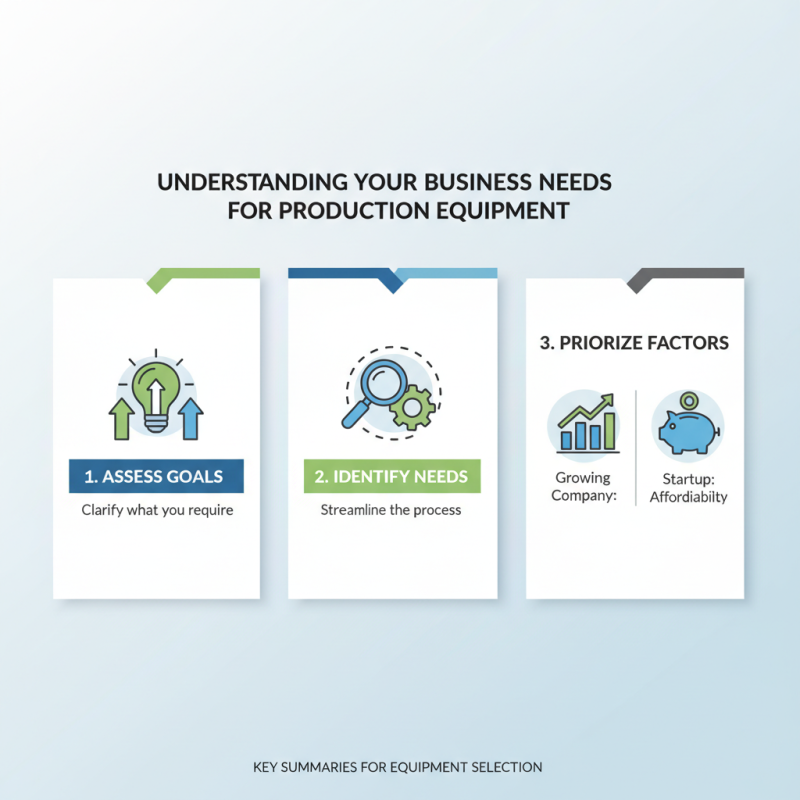
When selecting production equipment, understanding your business needs is critical. Assessing your goals helps clarify what you require. For example, a growing company might focus on scalability, while a startup may prioritize affordability. Identifying your most pressing needs can streamline this process.
Customizing your equipment choices requires deep knowledge of your production line. Evaluate the types of products you'll create. Certain machinery excels in specific tasks, which means knowing your product specifications is vital. You may face the temptation to choose the latest technology, but smart choices often stem from practical needs, not trends.
Consider the workflow as well. Analyze the volume of production and potential bottlenecks. Sometimes, investing in additional equipment is wiser than maximizing existing assets. Reflecting on past performance can inform better decisions for the future. Engage your team in discussions about efficiency—those on the ground often spot issues early. By aligning your equipment with your true operational needs, you enhance productivity and reduce waste.
Assessing Different Types of Production Equipment Available
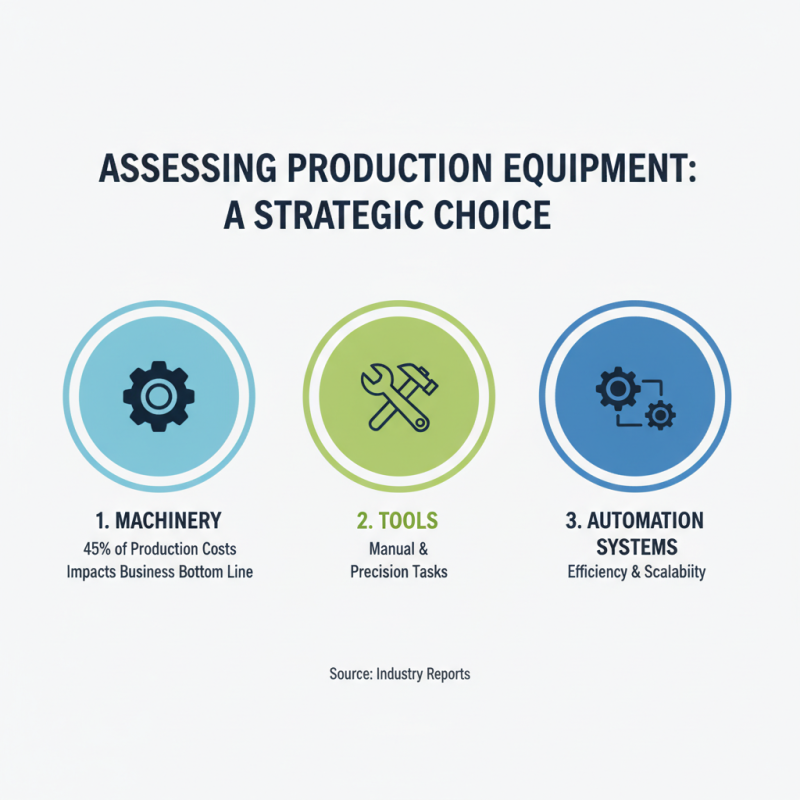
When selecting production equipment, understanding the types available is crucial. Common categories include machinery, tools, and automation systems. According to industry reports, machinery accounts for about 45% of production costs in manufacturing sectors. Investing wisely in machinery can significantly influence your business's bottom line.
Tip: Conduct a detailed analysis of your production needs. Identify the volume you expect and the product specifications. This lays the groundwork for choosing suitable equipment. Not every business can utilize advanced automation. Sometimes, traditional methods work best for small-scale operations.
Explore options such as CNC machines or assembly lines. Each has different maintenance needs. Proper maintenance can extend equipment life by 20%. Regular inspections are vital. Equipment affected by wear and tear can lead to production delays. Not assessing these factors may prove costly, impacting output quality and efficiency.
Evaluating Cost-Effectiveness and Budget Considerations
When evaluating production equipment, cost-effectiveness plays a crucial role. First, assess your budget. Determine how much you can realistically invest. This decision influences all future equipment choices. An expensive machine may offer high output, but consider maintenance and operational costs. These additional expenses can quickly add up.
Next, think about efficiency. A piece of equipment should not only fit your budget but also enhance productivity. Look for machines that offer a balance between purchase price and long-term savings. Research typical lifespan and energy consumption rates. If a machine fails to perform as expected, it can lead to financial strain.
Finally, gather feedback from experienced users. Their insights can highlight recurring issues or unexpected advantages. It's essential to consult multiple sources to form a well-rounded opinion. As you weigh your options, remember that the right equipment should align with your specific production needs. Investing wisely can optimize your operations and improve overall profitability.
Researching Suppliers and Reliability of Equipment
When selecting production equipment, reliability is a key factor. Research indicates that 75% of businesses report equipment failure leading to unplanned downtime. This underlines the importance of assessing supplier reliability. Reliable suppliers often have extensive experience and offer robust warranties, ensuring consistent support.
Investigating the background of potential suppliers can provide vital insights. According to a report by the Manufacturing Institute, 68% of companies prefer suppliers with verifiable performance records. Look for suppliers who prioritize quality control and adhere to industry standards. Analyzing customer testimonials can also reveal equipment performance over time.
Understanding lead times is crucial. Delays can disrupt production schedules significantly. A study by the Institute for Supply Management found that late deliveries caused 42% of surveying companies to lose revenue. It’s essential to consider suppliers who offer transparent timelines and keep you informed. Trustworthiness should be a top priority, as it contributes to long-term relationships and stable operations.
Implementing and Testing Equipment for Optimal Performance
When selecting production equipment, thorough implementation and testing are vital for optimal performance. Begin by evaluating your specific production needs. Each business has unique requirements that influence equipment choice. It is crucial to gather feedback from users involved in daily operations. They can offer insights about what features are essential and what equipment might lack efficiency.
Testing equipment in real-world conditions is a necessary step. Set clear metrics to analyze performance. For instance, monitor downtime and maintenance needs. These factors can reveal potential issues early on. Sometimes, you might find that equipment performs well on paper but does not meet expectations in practice.
Tips: Conduct pilot tests with new equipment. This allows you to identify any shortcomings before full-scale implementation. Training staff adequately ensures they can use the equipment effectively. Also, encourage open communication about any problems that arise. This fosters a culture of continuous improvement and helps achieve optimal performance. Remember, no equipment is perfect. Regular assessments will guide necessary adjustments.
2026 How to Choose the Best Production Equipment for Your Business? - Implementing and Testing Equipment for Optimal Performance
| Equipment Type |
Key Features |
Optimal Use Case |
Testing Methods |
Performance Metrics |
| CNC Machine |
Precision cutting, automation |
Metal fabrication |
Prototype testing, material analysis |
Cutting speed, accuracy levels |
| Injection Molding Machine |
High-speed production, durability |
Plastic part manufacturing |
Load testing, cycle time analysis |
Throughput, defect rate |
| 3D Printer |
Layer-by-layer construction |
Rapid prototyping |
Material properties testing |
Print quality, material usage |
| Laser Cutter |
Precision cutting and engraving |
Artwork and sign production |
Material thickness testing |
Edge quality, speed |
| Conveyor System |
Efficient material handling |
Production line processing |
Speed and load testing |
Throughput, operational uptime |