10 Tips for Buying Machinery and Equipment Globally
Buying machinery and equipment globally can give businesses access to specialized technology, broader supplier choices, and competitive pricing. Yet an attractive quote is only one part of a sound purchase. Buyers also need to assess machine capacity, materials, operating conditions, and the support available after delivery. A production line may look suitable in a catalog but perform differently under real workloads. Details matter.
A careful buying process starts with clear requirements and verifiable supplier information. Compare technical specifications, request recent references where appropriate, and confirm what the quoted price includes. Freight, installation, training, spare parts, and maintenance can change the total cost substantially. Check that the equipment will work with your facility’s power supply, floor space, and existing systems. Ask for drawings, operating manuals, and a realistic delivery schedule before committing.
International transactions can also involve customs procedures, insurance, payment terms, and local safety requirements. These vary by destination and equipment type, so confirm current requirements with qualified professionals and relevant authorities. Do not rely on assumptions or a supplier’s verbal assurances alone. Keep written records of specifications, inspections, agreed milestones, and warranty coverage. Even thorough checks cannot remove every risk; some details may still be missed. That is a reason to plan carefully, not to rush toward the cheapest offer. A practical comparison helps buyers choose equipment that fits both today’s production needs and the resources required to maintain it over time.

Set Capacity Needs and Benchmark Markets with UN Comtrade’s 200+ Economies
Set machine capacity before comparing overseas markets. Start with the output your operation needs per shift, then account for product mix, changeovers, maintenance, and expected downtime. A line rated for 500 units per hour may deliver less when materials vary or operators need frequent adjustments. Check the unit.
UN Comtrade offers international trade data covering more than 200 economies. Use it to compare imports and exports for relevant machinery categories across markets and years. Product codes matter: a broad category may combine equipment with different functions. Review the classification notes, reporting period, and trade values before treating one market as a clear leader. That matters.
Compare trade patterns with your capacity plan. Rising imports may point to investment demand, while steady exports can indicate an established manufacturing base. Neither trend proves that a market has suitable machines, service support, or delivery times. Trade values can also shift with prices and currency changes, so check quantities where available. A clean ranking can still mislead. Treat it as a shortlist, then verify specifications, installation needs, spare-parts availability, and local operating conditions with qualified suppliers. Some data gaps remain; record them rather than filling them with assumptions.
Check Supplier Quality and Machine Risks Against ISO 9001 and ISO 12100
The ISO Survey 2022 recorded approximately 1.27 million valid ISO 9001 certificates worldwide. That scale shows broad adoption, not proof that a specific machine is well built. Check the certificate’s scope, validity, and covered production site. Ask for inspection records, component traceability, and factory acceptance test results. A certificate can look reassuring. It is not a machine inspection.
Tip: Request a machine-specific risk assessment aligned with ISO 12100. It should identify hazards such as exposed belts, pinch points, noise, and unexpected restart. Check that safeguards are fitted, tested, and included in operating instructions. Compare the assessment with your actual setup; optional tooling or a changed layout may introduce risks the supplier’s documents miss.
Allianz Risk Barometer 2024 found that 31% of surveyed businesses named supply-chain disruption among their top risks. For overseas purchases, plan for delays in spare parts, commissioning, and technical support. Ask who will respond when a sensor fails, and how quickly critical components can arrive. Keep the answer in writing. Standards reduce uncertainty, but they cannot replace careful inspection or clear acceptance criteria.
Calculate Landed Cost from HS-Code Tariffs, VAT, Freight, and Incoterms 2020
Before comparing machinery prices, calculate the landed cost: the amount required to bring the equipment to its destination and clear it for delivery. Start with the correct HS code, then check the import duty against the destination country’s current tariff schedule. A small classification difference can change the rate. Confirm the code with a customs broker or the relevant customs authority; supplier estimates are useful, but not final.
Tip: Build a line-by-line estimate. Include the purchase price, freight, insurance, terminal handling, customs duty, and import VAT. VAT rules and calculation bases differ by country, so verify whether freight or duty is included in the taxable amount. Incoterms 2020 clarify who arranges transport, insurance, and customs tasks, but they do not set tax rates or replace the sales contract. Check the named place carefully. Details matter.
A spreadsheet can look precise and still be wrong. Ask freight providers for written quotes that show surcharges, delivery scope, and validity dates. Compare the quote with the chosen Incoterm: a low factory price may leave substantial transport costs on your side. Keep a contingency for storage or inspection delays, and label assumptions clearly. Treat the first estimate as provisional. Recheck it before placing the order.
Choose Shipping Routes: UNCTAD Says Sea Carries Over 80% of Goods Trade by Volume
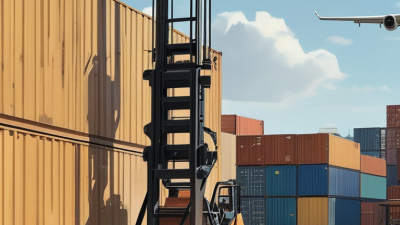
UNCTAD reports that more than 80% of global goods trade by volume moves by sea. That scale makes ocean freight a practical option for many machinery purchases, but it does not make every route suitable. A compact machine may fit a standard container; a tall press or long production line may need specialized loading and handling. Measure the equipment, including its packaging, before comparing freight quotes.
Check whether the destination port can handle the shipment’s size and weight. Then look beyond the port: inland roads, rail connections, lifting equipment, and warehouse access can affect delivery time and cost. Ask whether the route includes transshipment, where cargo changes vessels. More transfers can mean additional handling and more chances for delays. Details matter.
A low ocean rate can be misleading if it excludes port handling, storage, or inland transport. Request an itemized estimate and confirm who coordinates each stage. Build a time buffer around the estimated sailing schedule; weather and congestion can disrupt even a carefully planned route. I would not choose a route on price alone. Still, the most cautious plan can overestimate risk and cost, so compare realistic alternatives rather than assuming the longest route is safest.
10 Tips for Buying Machinery and Equipment Globally - Choose Shipping Routes: UNCTAD Says Sea Carries Over 80% of Goods Trade by Volume
| Route or Corridor |
Verified Geographic Fact |
Why It May Matter for Machinery |
What to Check Before Booking |
| Sea freight — global |
UNCTAD reports that maritime transport carries over 80% of world trade by volume. |
A common option for heavy, bulky, or non-urgent machinery; shipment schedules and total transit times vary by route and service. |
Compare port-to-port and door-to-door costs, sailing frequency, cargo handling, insurance, and inland transport. |
| Suez Canal corridor |
The canal is approximately 193 km long and connects the Mediterranean Sea with the Red Sea. |
It is an important passage on many sea routes between Europe and Asia. Disruptions or restrictions can affect routing and schedules. |
Ask whether the quoted itinerary uses the canal, what alternative routing is planned, and how schedule changes affect the delivery estimate. |
| Panama Canal corridor |
The canal is approximately 82 km long and provides a navigable link between the Atlantic and Pacific oceans. |
It can be relevant to cargo moving between the Americas and between Atlantic- and Pacific-facing markets. |
Confirm vessel eligibility, current canal operating conditions, expected transit, and any route-specific surcharges. |
| Strait of Malacca |
This major waterway between the Malay Peninsula and Sumatra is approximately 800 km long. |
It is a key passage for many Indian Ocean–East Asia sea routes, so congestion or route changes may affect schedules. |
Check the planned ports and transshipment points, schedule buffers, and arrangements for delays or cargo tracking. |
| Cape of Good Hope alternative |
The route around southern Africa is a sea-route alternative to passages through the Suez Canal for some Europe–Asia voyages. |
A longer routing can affect delivery timing, vessel schedules, and freight costs; the effect depends on the origin and destination. |
Request an updated itinerary and written confirmation of how changes in route, transit time, and charges are handled. |
| Any route for oversized equipment |
Route feasibility depends on the cargo’s packed dimensions and weight, plus vessel, port, and inland transport limits. |
Industrial machinery may need flat-rack, open-top, breakbulk, or other specialized handling rather than standard container space. |
Provide final packed dimensions and gross weight; verify lifting points, securing plans, port handling, permits, and delivery access. |
Note: Canal and strait lengths are approximate. Route availability, transit time, and charges can change; confirm current details with the freight provider and relevant port or canal authorities.
Plan Installation and Lifecycle Support Using ISO 55000 Asset-Management Principles
Buying machinery globally is not just a purchasing decision; it commits your operation to years of installation, maintenance, and support. ISO 55000 frames asset management around value, alignment, leadership, and assurance across an asset’s life. Apply that thinking before signing: map utilities, floor loading, access routes, commissioning responsibilities, operator training, and spare-parts lead times. A machine can arrive on schedule and still sit idle because a doorway is too narrow. It happens.
Tip: Request an installation-readiness checklist, a parts list with realistic delivery estimates, and written acceptance criteria. Assign one person to track each item. Keep maintenance manuals and training records accessible to the people who will use them, not just procurement.
Build support into the ownership plan. The U.S. Department of Energy’s Operations & Maintenance Best Practices Guide reports that predictive maintenance can reduce maintenance costs by 8–12% compared with preventive maintenance. That potential depends on good inspection data and people who can act on it; sensors alone do not prevent failures. Set baseline readings during commissioning, define inspection intervals, and review downtime and repair costs every quarter. One detail is easy to overlook: budgets often include the purchase price but underestimate commissioning delays and specialist travel. Check that assumption against your site’s actual conditions.