Choosing the best production line equipment in 2026 is less about buying the newest machine and more about matching equipment to the work. A fast conveyor may look impressive, but it can create bottlenecks if packaging or inspection cannot keep pace. The right choice depends on product type, required output, available floor space, staffing, and maintenance capacity. Small details matter. A narrow aisle, an awkward changeover, or a hard-to-reach sensor can affect daily performance.
Reliable evaluation starts with measurable needs. Compare throughput, changeover time, energy use, operator requirements, and access to spare parts. Ask suppliers for documented performance data and arrange a trial with materials similar to your own. Inspect how operators load the machine, clear routine jams, and clean contact surfaces. Safety features and straightforward maintenance are essential, not optional extras. Still, figures on a specification sheet rarely tell the whole story. A machine that performs well in a demonstration may behave differently during a full shift, and that uncertainty deserves attention.
Automation can improve consistency, but more automation is not automatically better. A simpler setup may suit a changing product range, while a high-volume operation may benefit from integrated inspection and packaging. Consider whether the system can connect with existing controls and whether staff can support it. The best production line equipment is the equipment that meets verified production goals, fits the real workflow, and remains serviceable over time. There is no perfect answer. Careful testing can prevent an expensive mismatch.
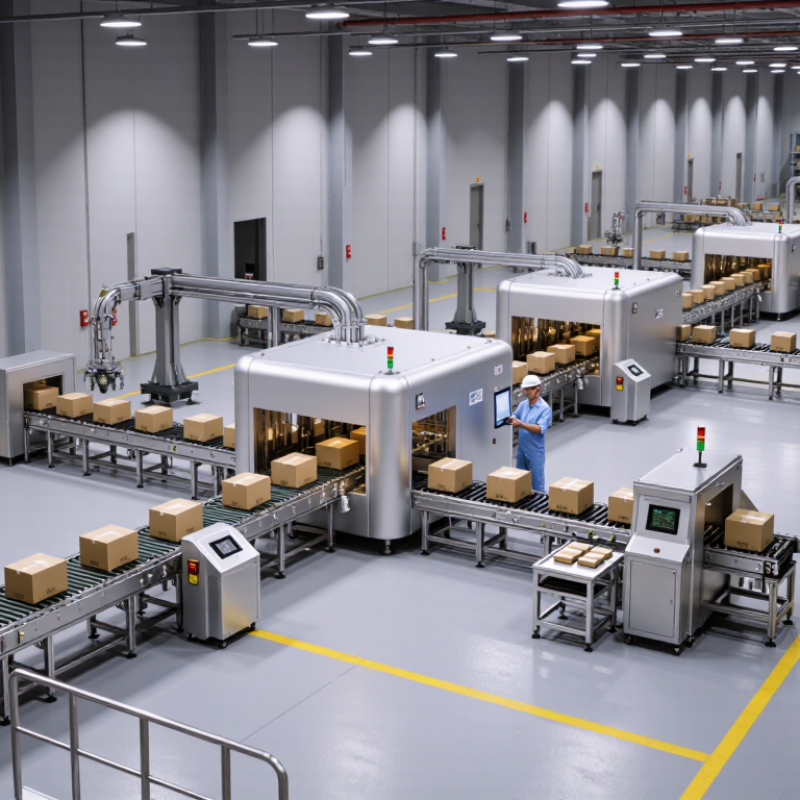
Production-line equipment is best defined by the job it performs, not by its size or price. A line may include feeders, forming machines, conveyors, inspection stations, and packers. Each stage should solve a specific production need. A vision sensor, for example, can check labels as containers pass, while a reject gate removes faulty units. That matters.
Capacity means sustained output under normal operating conditions, not a peak speed shown in a brochure. Compare units per hour with actual product size, changeover time, staffing, and planned downtime. Then locate the bottleneck. A fast filler cannot raise total output if a slower labeler creates a queue. Real shifts vary.
Flexibility describes how well equipment handles product changes, new packaging formats, and demand swings. Adjustable guides and accessible change parts can shorten changeovers. Modular stations may also allow future upgrades without replacing an entire line. Yet flexibility has trade-offs: extra settings can complicate training, and frequent adjustments may invite errors. Test a proposed setup with your own materials and operators. I would not treat a clean factory trial as proof of smooth daily use. Dust, uneven supply, and small operator habits can change results. Define requirements across function, capacity, and flexibility before comparing machines.

There is no universally best production line equipment in 2026; the right choice depends on product mix, takt time, and tolerance requirements. Conveyors suit steady, repeatable movement between workstations. A belt carrying warm molded parts needs guides, sensors, and room for maintenance access. Conveyors are less adaptable when product routes change often. Simple, but not effortless.
CNC machines deliver controlled cutting for parts with tight dimensions, while robots handle repetitive loading, welding, or palletizing. The International Federation of Robotics reported 4,281,585 industrial robots operating worldwide in 2023, in World Robotics 2024. That scale signals broad adoption, not a guarantee of payback. A robot cell still needs safe work zones, reliable tooling, and staff who can troubleshoot stoppages. Downtime gets expensive quickly.
Automated inspection systems can check dimensions, surface defects, or labels at production speed. Deloitte’s 2024 Smart Manufacturing Survey found that 92% of surveyed manufacturing executives viewed smart manufacturing as a competitiveness driver over the next three years. Yet inspection accuracy depends on lighting, camera placement, and clean reference images. Small defects still matter. In practice, compare total cycle time, changeover effort, maintenance skills, and the cost of missed defects. A fast system can simply produce mistakes faster.
A practical comparison of conveyors, CNC machines, industrial robots, and automated inspection systems.
Ratings are qualitative capability scores from 1 (low) to 5 (high), reflecting typical equipment roles rather than measured benchmark results. Actual performance varies with the application, configuration, and production process.
What Is the Best Production Line Equipment in 2026?
Benchmark Automation: 541,302 Industrial Robots Installed Worldwide in 2023
The International Federation of Robotics reported 541,302 industrial robot installations worldwide in 2023. That was the second-highest annual total on record, following the 2022 peak. The figure signals strong investment in automation, but it does not prove that every production line needs robots. A food-packing line, for example, may benefit more from reliable conveyors and vision inspection than from a complex robotic cell.
The IFR’s World Robotics 2024 report also put global robot density at 162 robots per 10,000 manufacturing employees in 2023. For equipment planning, this is useful context, not a target. Compare cycle time, changeover duration, unplanned downtime, and maintenance access against your own production data. A robot may move parts quickly, yet a poorly placed safety gate or frequent tool changes can still slow the whole line. The numbers cannot show those local bottlenecks.
Tips: Time one full shift before buying. Record stoppages, changeovers, and manual handling. Small measurements help. I have seen neat capacity estimates miss awkward product variation; revisit the assumptions with operators before committing.
What Is the Best Production Line Equipment in 2026?
Assess Equipment with OEE, Cycle Time, Changeover, and Safety Metrics
The best equipment is not always the fastest machine on the specification sheet. Measure overall equipment effectiveness (OEE) as availability × performance × quality, then check what causes losses during real shifts. A machine may run quickly but lose hours to minor stoppages or rejected parts. Track results by product and shift; a single plant-wide average can hide trouble.
Cycle time should reflect a repeatable production run, not a brief demonstration. Compare measured output with demand, and include loading, inspection, and material handling. Deloitte’s 2024 Smart Manufacturing and Operations Survey says manufacturers expect smart-manufacturing investments to improve labor productivity by 7–20%, production output by 10–20%, and capacity utilization by 10–15%. These are expectations, not guaranteed results. Treat them as context, not a purchasing promise.
Changeover time matters when orders vary. Time the process from the last good unit of one run to the first good unit of the next. Watch the handoff. Record tool swaps, adjustments, and trial parts. Safety belongs in the same evaluation: review guarding, emergency stops, access for cleaning, and awkward reaching. OSHA’s machine-guarding guidance highlights hazards at points of operation and rotating parts. A fast changeover is not an improvement if it encourages unsafe workarounds. Small details matter. And they are easy to miss.
Use this comparison as an initial planning guide, not a guarantee of equipment performance. OEE, cycle time, and changeover figures vary with product design, operating conditions, staffing, maintenance, and measurement methods. Validate figures with trials using your own products and production requirements.
| Equipment type | Typical application | Planning OEE range | Illustrative cycle time | Typical changeover considerations | Safety metrics to assess | Best suited for |
|---|---|---|---|---|---|---|
| CNC machining cell | Milling or turning metal components | 60–85% | About 1–10 minutes per part, depending on machining content | Tooling, fixture, program, and workholding changes; record product-to-product minutes | Guard and interlock validation; access frequency; exposure to rotating tools, chips, and coolant; ergonomic assessment for loading | Precision parts, repeatable machining, and moderate-to-high product variety |
| Automated filling and packaging line | Filling, capping, labeling, or packing containers | 65–85% | Approximately 0.5–5 seconds per container at the line level; verify actual sustained rate | Container, format-part, recipe, and label changes; measure line clearance and restart time | Guarding and emergency-stop coverage; jam-clearing interventions; slip risks from spills; safe access during cleaning | High-volume production of consistent packaged products |
| Injection molding machine | Molding plastic components using a fixed or multi-cavity tool | 65–85% | About 15–90 seconds per shot; output per shot depends on cavity count | Mold, material, color, and process-parameter changes; include cooling, setup, and first-piece approval time | Mold-area safeguarding; interlock function; exposure to hot surfaces and materials; lifting and mold-handling risks | Repeat production of molded parts with stable tooling and demand |
| Robotic assembly cell | Joining, fastening, dispensing, or placing components | 60–80% | Approximately 5–60 seconds per assembly, depending on task complexity | Gripper, fixture, recipe, and program changes; track validation and restart time as well as physical setup | Documented risk assessment; validated safeguarding and safety functions; access and recovery procedures; residual-risk review | Repetitive assembly tasks where consistent positioning or reduced manual handling is valuable |
| Conveyor and palletizing system | Moving, sorting, stacking, or palletizing finished goods | 70–90% | Often measured as cases per minute; roughly 5–60 cases per minute depending on layout and load | Pallet pattern, case-size, and product changes; include sensor, recipe, and downstream-line adjustments | Conveyor pinch-point guarding; pedestrian separation; safety-scanner or interlock checks; manual jam-clearing and lifting risks | End-of-line material handling and reducing repetitive manual stacking |
How to compare options: Define planned production time consistently, calculate OEE as Availability × Performance × Quality, and measure changeover from the last good unit of the previous run to the first good unit of the next run. For safety, assess machine-specific hazards and verify safeguards against applicable local regulations and standards; a single safety percentage should not replace a documented risk assessment.
What Is the Best Production Line Equipment in 2026?
Choose 2026-Ready Systems by Integration, Energy Use, and Total Cost of Ownership
The best production line is not always the fastest one. It is the system that fits existing controls, meets output targets, and stays affordable to operate. Check how equipment connects with plant networks, scheduling software, and maintenance systems. Ask for interface specifications, data access terms, and commissioning support before signing. A conveyor that cannot share fault data may turn a minor jam into a long search.
Energy use deserves a practical test. The U.S. Department of Energy’s Better Plants program notes that energy treasure hunts can uncover savings of around 5–15%. Measure real operating conditions, including idle time, changeovers, and compressed-air demand. A short trial can reveal more than a glossy efficiency estimate. Small details matter.
Compare total cost of ownership across the expected service life. Include installation, training, spare parts, maintenance labor, energy, and downtime—not just the purchase price. Deloitte’s 2024 Smart Manufacturing Survey found that 86% of surveyed manufacturers saw smart manufacturing as a competitiveness driver over the next five years. Still, digital features are not automatically useful. If operators cannot act on the data, dashboards may add cost without improving output. Ask vendors to demonstrate a representative changeover and fault recovery, then check the results against your own line.
JK Machinery a.s.
Psohlavců 322/4, Praha 4,
Czechia
T: +420 777 610 380
E: sale@roll-formingmachinery.com