
Why Choose Marine Collagen for Global Sourcing?
Marine Collagen is gaining attention as brands seek traceable, scalable, and lower-waste protein ingredients. Grand View Research valued the global collagen market at approximately USD 10.9 billion in 2022. It also forecast continued growth through 2030. Meanwhile, the Food and Agriculture Organization reported global fisheries and aquaculture production of about 214 million tonnes in 2020. These figures reveal a large raw-material base, including fish skin and scales often overlooked by processors.
The sourcing case is practical. Fish-derived collagen can support by-product utilization, especially when suppliers document species, harvest locations, processing temperatures, and batch testing. Professor David L. Kaplan, a leading collagen biomaterials researcher, has described collagen as “a very versatile material.” That versatility matters for food, beauty, and healthcare applications. It does not remove the need for discipline.
Market estimates differ. They are not perfectly aligned. Grand View Research, Fortune Business Insights, and other commercial reports use different product definitions and regional boundaries. Buyers should therefore verify volumes, purity, molecular weight, allergen controls, and certificates directly with suppliers. A glossy brochure is not enough.
For global sourcing teams, the strongest Marine Collagen strategy combines technical performance with documented origin. Ask for heavy-metal analysis, microbiological results, sustainability evidence, and stable logistics. Check whether claims match local regulations. The opportunity is real, but it is not automatic. Weak traceability can damage trust faster than attractive pricing can build it. A responsible supplier makes every step visible, from coastal collection to the sealed drum in the warehouse.
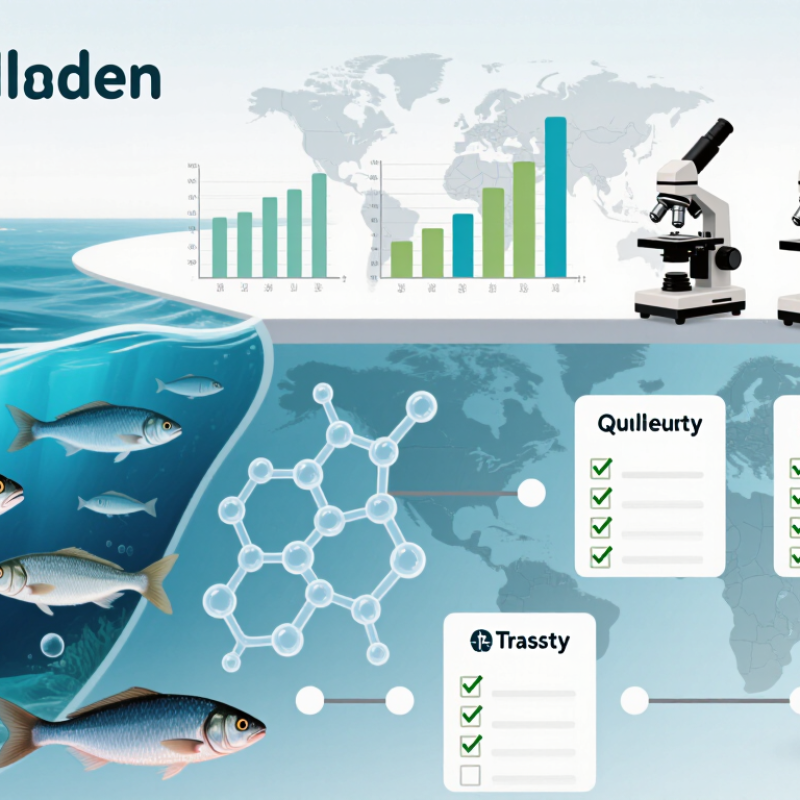
Marine collagen is commonly sourced from fish skin, scales, and bones. These materials contain mainly Type I collagen, the structural protein found in skin, tendons, and bones. For global sourcing, this origin offers a practical alternative to land-animal collagen.
Fish by-products can be collected after food processing, reducing unnecessary material waste. However, source quality varies. Species, harvesting location, processing temperature, and storage conditions all affect the final ingredient. Experienced buyers should request species identification, batch traceability, allergen information, and laboratory testing for contaminants. Type I should be confirmed through reliable technical documentation, not assumed from the word “marine.” No supply chain is perfectly simple. A supplier may provide strong records but still need periodic verification.
Tips: Ask for certificates of analysis, origin records, microbiological results, and heavy metal testing. Review whether the documentation matches the actual production site. Check sustainability statements carefully, because broad claims can hide important gaps. Small details matter. Clear specifications also help with customs review and local compliance. One overlooked issue is allergen communication, especially when products enter markets with different labeling rules.

FAO fisheries literature estimates that processing by-products can represent 20–80% of a fish’s raw weight. The range varies by species, filleting method, and factory design. Skin, scales, bones, and frames often remain after filleting. They are not automatically useless waste.
This matters when selecting marine collagen suppliers. The FAO’s The State of World Fisheries and Aquaculture 2024 reported 185.4 million tonnes of global fisheries and aquaculture production in 2022. A small improvement in by-product recovery can therefore create meaningful material value. It may also reduce pressure on deliberately harvested collagen sources. Practical sourcing starts with documented origin, cold-chain control, and clear separation of species.
The number needs caution. It is not a universal conversion rate. A supplier should show actual recovery records, not repeat the 20–80% figure without context. Quality teams should verify hydroxyproline content, molecular-weight distribution, microbiological results, heavy metals, and allergen controls. Stable marine collagen also depends on rapid processing, clean water, and consistent drying conditions.
Reports from FAO and broader seafood-traceability guidance support a more disciplined view. Lower cost alone is a weak sourcing argument. Better evidence is stronger. That evidence should connect each collagen lot with the original fishery, processing site, test results, and applicable market requirements. Some supply chains still lack complete records. That gap deserves attention.
Why Choose Marine Collagen for Global Sourcing?
Commercial marine collagen hydrolysates are often selected for their low molecular-weight peptide profile. In many specifications, peptide fractions commonly fall below 3 kDa. This does not mean every peptide reaches that range. The final distribution depends on raw material, enzyme selection, hydrolysis time, and filtration controls.
For buyers, a 3 kDa claim needs evidence, not attractive wording. Request SEC-HPLC or GPC data showing the complete molecular-weight distribution. A certificate should also report protein content, moisture, ash, microbiological limits, and heavy metals. Enzymatic processing can improve solubility, but excessive hydrolysis may affect taste and functionality. That trade-off is easy to overlook.
Sourcing also begins before hydrolysis. The FAO’s State of World Fisheries and Aquaculture 2024 reported 185.4 million tonnes of global fisheries and aquaculture production in 2022. This scale supports wider access to marine raw materials, but it does not guarantee traceability. Suppliers should identify species, harvest area, processing site, and chain-of-custody records. Cold-chain handling matters too. A small gap here can damage an otherwise strong peptide profile. Sustainability claims also require caution; “marine” alone is not proof of responsible sourcing. Independent audits help, although audit coverage is rarely perfect.
| Commercial Sourcing Dimension | Indicative Technical Data | Why It Matters for Global Procurement | Recommended Verification |
|---|---|---|---|
| Primary Marine Raw Materials | Fish skin, scales, bones and other processing co-products are commonly used. Skin and scales are generally associated with Type I collagen. | Using processing co-products can support raw-material efficiency and reduce competition with food-grade protein streams. | Confirm species, anatomical source, country of origin and documented by-product traceability. |
| Collagen Type | Type I collagen is the predominant collagen type reported in many fish-derived materials. | A consistent collagen type helps manufacturers maintain predictable formulation and technical performance. | Request identity testing using validated protein or collagen characterization methods. |
| Hydrolysis Method | Commercial hydrolysates are typically produced through enzymatic hydrolysis, often following acid or alkaline pretreatment. | Controlled hydrolysis improves dispersibility and produces peptides suitable for powders, beverages and nutrition products. | Review the enzyme process, hydrolysis controls, batch records and allergen-management procedures. |
| Average Molecular Weight | Commercial marine collagen hydrolysates are commonly specified in the low-kilodalton range, frequently around 1–5 kDa depending on the product. | Molecular-weight distribution affects solubility, sensory properties, processing behavior and formulation claims. | Require GPC/SEC or an equivalent validated molecular-weight distribution report. |
| Peptide Fraction Below 3 kDa | Many commercial hydrolysates report a substantial fraction below 3 kDa; indicative product specifications commonly fall within approximately 70–95%, but results are product- and method-dependent. | A high sub-3 kDa fraction is often selected for rapid dispersion and a lower-viscosity formulation profile. | Compare the same analytical method, including calibration standard, reporting basis and test laboratory. |
| Characteristic Amino Acids | Collagen is rich in glycine, proline and hydroxyproline. Hydroxyproline is commonly used as a collagen-related analytical marker. | The amino-acid profile can support raw-material identity and help distinguish collagen hydrolysate from non-collagen proteins. | Request an amino-acid profile and hydroxyproline result with defined analytical methodology. |
| Protein Content | Dry marine collagen hydrolysates commonly contain approximately 85–95% protein, depending on moisture, ash and processing conditions. | High protein content supports standardized dosing and reduces the amount of inactive material per serving. | Verify the result using a recognized nitrogen-to-protein method and review moisture and ash data together. |
| Solubility and Dispersion | Hydrolyzed collagen is generally more water-dispersible than intact collagen, particularly in powders designed for beverage applications. | Improved dispersion can simplify filling, blending and preparation in cold or ambient beverages. | Test solubility at the intended concentration, temperature, pH, mixing time and water hardness. |
| Flavor and Odor Control | Marine raw materials may have characteristic fish notes; deodorization, purification and process control influence the final sensory profile. | Sensory neutrality is important for supplements, functional foods and ready-to-mix drink products. | Conduct a blind sensory evaluation and request volatile, oxidation and organoleptic specifications. |
| Heavy-Metal Control | Lead, cadmium, mercury and arsenic should be controlled according to the destination market and product category. Results depend on species, location and processing. | Different markets apply different limits, so compliance must be checked before shipment and product registration. | Require an accredited-laboratory certificate of analysis using ICP-MS or an equivalent validated method. |
| Microbiological Quality | Typical release testing may include total aerobic microbial count, yeast and mold, Enterobacteriaceae and absence of specified pathogens. | Consistent microbiological control reduces spoilage risk and supports import clearance and finished-product safety. | Align limits with the importing country, customer specification and intended application. |
| Allergen and Species Declaration | Fish-derived collagen is generally subject to fish-allergen labeling requirements in many jurisdictions. Species declaration may also be required. | Correct labeling and segregation are essential for regulatory compliance and consumer safety. | Confirm species, shared-facility controls, allergen statement and cross-contact risk assessment. |
| Traceability | A robust supply chain should link finished batches to raw-material source, processing date, production lot and test records. | Traceability supports recalls, customs documentation, quality investigations and long-term supply continuity. | Request batch coding, chain-of-custody records, country-of-origin documents and supplier-audit evidence. |
| Global Logistics | Dry collagen hydrolysate is commonly shipped as a powder in sealed, moisture-resistant packaging. Storage is typically cool, dry and protected from direct sunlight. | Stable dry handling can simplify international transport compared with liquid protein ingredients. | Confirm packaging format, shelf life, storage conditions, pallet configuration and transport humidity controls. |
| Sustainability Considerations | Using fish-processing co-products may improve material utilization, but environmental performance depends on fishery management, energy use and processing practices. | A documented sustainability approach can strengthen responsible sourcing and customer due diligence. | Review fishery or farm origin, environmental certifications where applicable, energy data and by-product utilization records. |
Why Choose Marine Collagen for Global Sourcing?
Marine collagen offers a practical sourcing option when suppliers can prove safe handling, stable quality, and clear origin. Global seafood chains may involve vessels, processors, cold storage, and exporters. Each handoff creates a control point. The FAO’s State of World Fisheries and Aquaculture 2024 reported 185.4 million tonnes of global fisheries and aquaculture production in 2022. That scale makes documented controls essential, not decorative.
HACCP has seven principles: hazard analysis, critical control points, critical limits, monitoring, corrective actions, verification, and recordkeeping. For marine collagen, teams may assess microbial risks, temperature abuse, cleaning chemicals, and raw-material identity. A receiving log should show the lot number, supplier, arrival temperature, and inspection result. Simple details matter. WHO estimates that contaminated food causes 600 million illnesses and 420,000 deaths annually. The figure explains why every control needs evidence.
ISO 22000 strengthens this structure through prerequisite programs, communication, risk management, and traceability. A traceability test should move backward to the raw material and forward to the finished batch. Records should connect production dates, test results, storage conditions, and shipment documents. No system is flawless. A misplaced lot code can still break the chain. Regular mock recalls expose that weakness before a customer does. ISO 22000:2018 requires organizations to maintain traceability information, while verification confirms whether procedures actually work.
Why Choose Marine Collagen for Global Sourcing?
Marine collagen offers a broad raw-material base, but supplier selection requires evidence. FAO’s State of World Fisheries and Aquaculture 2024 reported about 185 million tonnes of global fisheries and aquaculture production in 2022. That scale creates complex harvest, processing, and transport routes. Ask suppliers to identify species, catch area, vessel or farm, processing site, and lot number. Traceability should work backward and forward, not stop at a warehouse.
Heavy metals need risk-based testing. The FDA Fish and Fishery Products Hazards and Controls Guidance notes that contamination risks vary by species and harvest location. Request recent results for lead, cadmium, mercury, and arsenic. Check test methods, detection limits, laboratory accreditation, and sampling plans. Microbiology needs equal attention. Review total plate count, yeast and mold, Salmonella, and other relevant pathogens. A clean certificate is not enough if the sample plan is weak.
Tips: Compare at least three consecutive lots. Keep sealed samples. Confirm every result against your specification and destination-market rules. For Halal sourcing, verify ingredient origins, processing aids, cleaning procedures, and segregation controls against a recognized Halal standard, such as OIC/SMIIC 1:2019. Certificates can expire. Recheck them. A supplier may pass one audit and still lose control during seasonal production. That uncomfortable possibility deserves routine review.
JK Machinery a.s.
Psohlavců 322/4, Praha 4,
Czechia
T: +420 777 610 380
E: sale@roll-formingmachinery.com