Wheel Cover Injection Molding is a manufacturing process that shapes plastic into covers designed to fit vehicle wheels. Plastic pellets are heated until they melt, then injected under pressure into a shaped steel mold. The material cools, the mold opens, and the part is removed for finishing or inspection. That matters. A precise mold helps create repeatable shapes, but even small changes in temperature, pressure, or cooling time can affect the result.
A wheel cover’s design must balance appearance with practical use. Ribs on the back can add stiffness, while clips or other fastening features help the cover attach to a wheel. The mold also influences visible details, such as gloss, texture, and the position of the gate mark left by plastic entering the cavity. Small details count. Manufacturers typically check dimensions, fit, surface quality, and resistance to expected heat and impacts. The right resin and test methods depend on the design and its intended conditions; no single material suits every cover. Still, a smooth sample can hide weak clips or uneven cooling. That is worth remembering. Good production depends on testing parts, not just approving a polished prototype. This introduction explains how the process works, which design choices matter, and what to consider when evaluating quality and production efficiency.
What Is Wheel Cover Injection Molding?
What Wheel Cover Injection Molding Is and How It Works
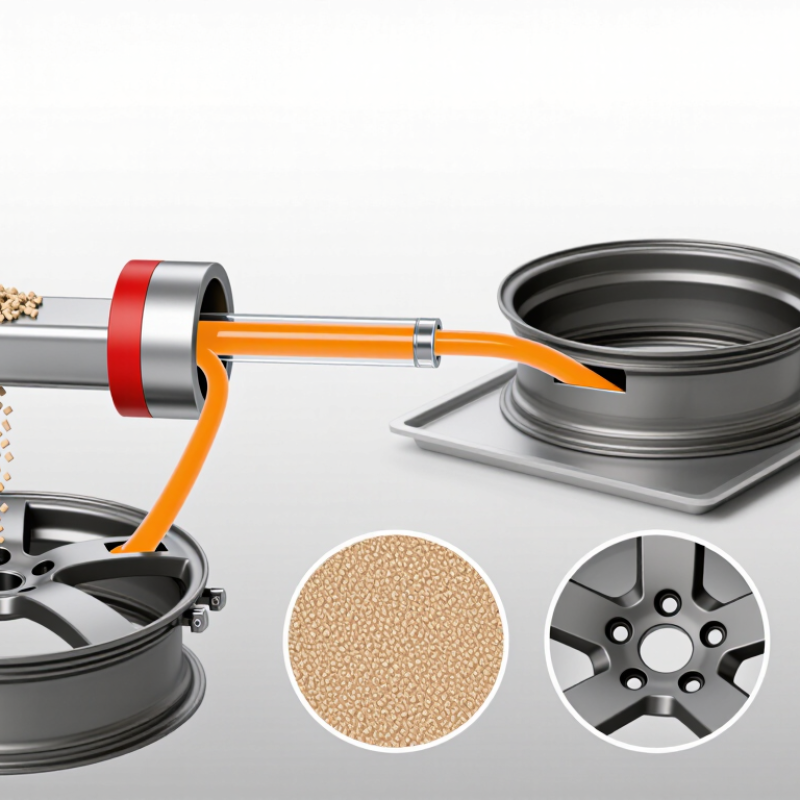
Wheel cover injection molding shapes a plastic part inside a precision-machined mold. The process starts with thermoplastic pellets, which are heated until they become a consistent melt. A screw then pushes the material through a nozzle into the closed mold cavity. Pressure helps the plastic fill details such as spoke openings, clips, and shallow ribs.
Then the part cools. Cooling time matters: uneven temperatures can cause warping, sink marks, or a cover that does not sit flush against the wheel. Once the plastic is firm, ejector pins release it from the mold. A technician may trim small gates and inspect the edges, mounting clips, and visible surface. Small flaws can matter.
Mold design and material choice shape the result. Ribs can add stiffness without making the cover unnecessarily heavy, while clip geometry must allow secure fitting and removal. Engineers also account for shrinkage as plastic cools, though early estimates may need adjustment after trial runs. That part is easy to underestimate. A sample may look smooth on a bench yet reveal fit problems when installed on a real wheel. Testing the finished cover under expected heat, vibration, and handling helps expose those issues before production scales up.
Injection-molded wheel covers commonly use polypropylene because it is light, moldable, and resistant to everyday knocks. Some designs use ABS or blended resins when stiffness or surface finish matters more. Formulations may include UV stabilizers, pigments, and impact modifiers. These help the cover withstand sunlight, road grit, and repeated washing, though performance depends on the exact resin and exposure. A textured outer face can disguise scuffs; the hidden side needs sturdy ribs and flexible retention clips. Small changes matter.
Designers must balance clip strength, wheel clearance, cooling, and easy removal. Poorly placed gates can leave visible flow marks, while uneven wall thickness may cause sink marks or warping. In its vehicle lightweighting guidance, the U.S. Department of Energy’s Vehicle Technologies Office estimates that a 10% reduction in vehicle mass can improve fuel economy by 6–8%. A wheel cover alone contributes only a small fraction of that potential; claiming otherwise would overstate its effect. Fit and durability still deserve careful testing.
Tip: Check clip fit on the actual wheel, not only in a CAD model. Leave clearance for brake heat and dirt. One detail is easy to miss: a cover that looks perfect indoors may rattle after rough-road use.
What Is Wheel Cover Injection Molding?
The Main Stages of the Wheel Cover Molding Process
Wheel cover molding begins with a part design and a resin choice suited to the required fit, finish, and service conditions. Engineers check wall thickness, clip positions, and the flow of plastic through the mold. Small details matter. A clip that looks fine on screen may prove too stiff after molding.
Before production, technicians prepare the mold and set the machine’s temperature, pressure, and cycle settings. Resin is dried when its material specification requires it, then heated until it can flow. The machine clamps the mold shut and injects molten plastic into the cavity. Cooling follows. It must be long enough to help the cover hold its shape, but excessive cooling can slow output. The right balance takes testing, not guesswork.
When the mold opens, ejector pins release the cover. Operators trim any leftover material and inspect the surface, edges, and attachment clips. They may check a sample on a wheel or use a fixture to confirm fit. Warping, sink marks, or weak clips can point to uneven cooling or settings that need adjustment. Not every defect has an obvious cause; careful records and repeat checks help narrow it down.
Wheel-cover quality begins with stable molding conditions. Resin moisture, melt temperature, and cooling time can affect surface finish and dimensional consistency. Before a production run, operators should confirm the material batch and check that vents and gates are clean. Small process changes matter.
Inspect parts for flash around the rim, sink marks near thick sections, visible weld lines, and uneven gloss. These defects can signal poor filling or cooling, but appearance alone is not enough. Measure key diameters and clip locations against the approved drawing. Then test fitment on a representative wheel. Clips should engage evenly without excessive force or looseness. A clean-looking cover can still fit poorly.
No inspection plan is perfect. Sample checks should include retention, vibration, and temperature exposure where the product requires them. Record results by cavity and production lot; one cavity may behave differently from another. Cosmetic acceptance can also be subjective, so clear reference samples help inspectors make consistent decisions. Still, a reference sample cannot replace measured limits. Teams should review recurring defects and adjust the process carefully, rather than hiding flaws with extra inspection. Some variation remains, and that deserves honest review.
Injection molding forms a wheel cover by injecting molten thermoplastic into a shaped mold. This example checklist counts common checks in four areas; it is not production-performance data or a universal specification.
Checks represented: visual defects (flash, sink marks, short shots); dimensions (overall diameter, clip locations, warpage); material and process (resin condition, melt and mold temperatures, process records); fit and validation (retention, balance or runout, environmental testing). Actual inspection criteria depend on the part design, resin, tooling, and customer requirements.
Injection-molded wheel covers are commonly used on passenger cars with steel wheels, as well as rental vehicles, delivery fleets, and some utility vehicles. They provide a finished look and help shield wheel faces from brake dust, road grime, and light scuffs. A cover is not a substitute for a structural wheel. Fit matters.
Manufacturers use thermoplastics such as polypropylene to form detailed spoke patterns, clips, and outer rims in one repeatable process. The material is relatively light, and molded designs can include textures or color throughout the part. This can reduce the need for separate decorative pieces and support consistent production across large batches. Small details count: clips must grip securely, while clearances need to accommodate wheel shape and normal temperature changes.
For fleet operators, replaceable covers can make worn or mismatched wheels look more uniform without changing the wheels themselves. For drivers, they offer a practical appearance upgrade with little added weight. Still, a loose cover may rattle or come off over rough roads, and finishes can fade after prolonged sun exposure. Those trade-offs are easy to overlook. Good design depends on accurate fit, durable material, and testing on the intended wheel—not appearance alone.
| Aspect | Typical Details | Practical Relevance |
|---|---|---|
| What it is | A manufacturing process in which heated thermoplastic is injected into a shaped mold, cooled, and ejected as a wheel cover. | It can produce repeatable parts with molded-in features such as ribs, clips, and surface textures. |
| Typical applications | Decorative covers fitted over compatible steel wheels on passenger vehicles and some light-duty vehicles. | Wheel covers can change a wheel’s appearance and help shield parts of the wheel from dirt and road splash. They are not structural wheels. |
| Common materials | Polypropylene (PP) is commonly used. Other thermoplastics, including ABS, may be selected where their performance and design characteristics suit the application. | Material choice affects impact behavior, flexibility, weight, heat resistance, surface finish, and cost. |
| How the process works | Plastic pellets are melted in an injection-molding machine, pushed into a closed mold, cooled, and removed. The part may then receive finishing or inspection. | The mold defines the cover’s geometry and surface details; process settings and mold design influence consistency and appearance. |
| Attachment features | Depending on the design, covers may use molded clips, retaining rings, or other retention features to fit a compatible wheel. | Fit and retention should be checked for the specific wheel design. Incorrect fit can cause looseness or loss of the cover. |
| Design considerations | Designers consider wheel dimensions, clearance, clip strength, wall thickness, draft angles, cooling, and the intended surface finish. | These factors help the part release from the mold and support reliable fit, appearance, and performance in use. |
| Advantage: repeatability | Once tooling and process settings are established, injection molding can make large quantities of similar parts. | Consistent production is useful for vehicle programs and replacement-part supply. |
| Advantage: design flexibility | Complex contours, ribs, openings, and decorative details can often be formed directly during molding. | Design features can be integrated into the part rather than assembled as separate components. |
| Advantage: lightweight construction | Thermoplastic covers are generally lightweight compared with many metal alternatives. | Lower part weight can make covers easier to handle and install; the cover does not replace the load-bearing wheel. |
| Limitations | Tooling requires upfront investment, and plastic parts can be affected by impacts, temperature, ultraviolet exposure, and aging. | Material selection, testing, and suitable care matter. A damaged or poorly retained cover should be inspected or replaced. |
Note: Material, attachment method, and fit vary by design. Always use a wheel cover specified for the particular wheel and vehicle application.
JK Machinery a.s.
Psohlavců 322/4, Praha 4,
Czechia
T: +420 777 610 380
E: sale@roll-formingmachinery.com