Top Granular Seaweed Fertiliser Suppliers Worldwide?
Choosing the right Granular Seaweed Fertiliser supplier requires more than comparing prices or attractive packaging. Product quality can vary with seaweed species, harvesting conditions, extraction methods, and granulation technology. A reliable supplier should explain these details clearly.
Look for manufacturers with documented experience in agricultural inputs. Their facilities should support batch testing, traceable sourcing, and consistent granule size. Independent laboratory reports can help verify nutrient content, moisture levels, heavy metal limits, and biological claims. Certifications may add confidence, but they should be checked against current standards and issuing bodies.
Details matter.
This guide examines leading Granular Seaweed Fertiliser suppliers worldwide through practical and professional criteria. These include product formulation, manufacturing capacity, quality control, technical support, export experience, and customer feedback. Suppliers serving commercial farms may offer different strengths from those supporting horticulture, turf, or organic crop production. Application guidance also deserves attention. A strong supplier should provide clear dosage instructions, storage advice, and compatibility information.
No supplier is perfect. Public information can be incomplete, and marketing language may appear stronger than the available evidence. Regional regulations, soil conditions, and crop requirements also influence product performance. Therefore, this overview should support careful comparison, not replace local agronomic advice or independent testing. The most dependable choice is usually the supplier that communicates limitations honestly and provides verifiable evidence behind its claims.
What Is Granular Seaweed Fertiliser and How Does It Work?
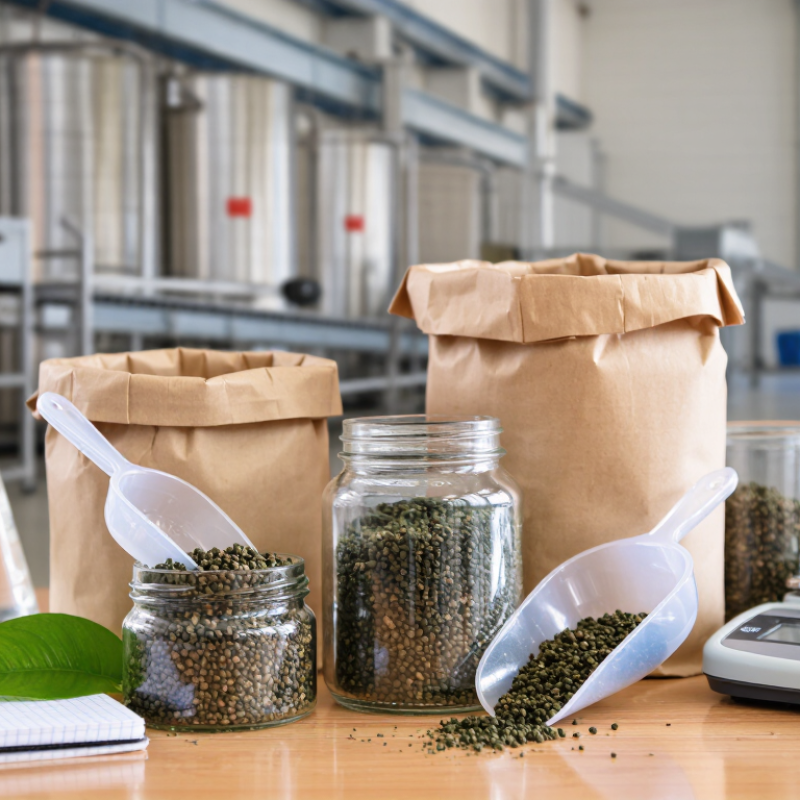
Granular seaweed fertiliser is dried seaweed processed into small, spreadable particles. It usually contains organic matter, trace minerals, and natural plant compounds. Unlike synthetic fertiliser, it is not mainly designed to deliver large amounts of nitrogen, phosphorus, or potassium. Its value often lies in supporting soil condition and plant resilience.
When moisture reaches the granules, they soften and release soluble compounds around the root zone. Soil microbes then help break down the material. This process may improve moisture retention, root activity, and nutrient availability. Results depend on seaweed species, processing temperature, soil type, and application rate. More is not always better. Excess material can waste money and disturb nutrient balance.
Reliable worldwide suppliers should provide clear testing information, production details, and recommended rates for specific crops. Look for consistent granule size, low contamination risk, and transparent declarations of nutrient content. Field users often mix the product into planting soil or apply it before irrigation. In dry beds, little change may appear. That limitation matters. A careful grower should test a small area first, record plant growth, and compare untreated soil. Seaweed fertiliser can support a broader soil program, but it cannot repair severe nutrient deficiencies by itself. Its performance is useful, yet sometimes uneven.
What Is Granular Seaweed Fertiliser and How Does It Work?
Granular seaweed fertiliser is produced by drying and processing seaweed into granules for easier storage, transport and soil application. The chart shows broad, literature-based nutrient ranges commonly reported for dried seaweed materials on a dry-weight basis. Actual values vary by species, harvest location and processing method.
Seaweed granules mainly work by supplying modest amounts of organic nutrients and minerals while adding biologically active compounds and organic matter. When moisture is present, the granules gradually soften and release soluble components into the root zone. They are generally used as a soil conditioner or supplementary fertiliser rather than a complete replacement for a balanced N-P-K programme.
Data interpretation: approximate dry-matter ranges compiled from commonly reported seaweed composition values; not a supplier or brand comparison.
Key Benefits of Granular Seaweed Fertiliser for Plant Growth
Top Granular Seaweed Fertiliser Suppliers Worldwide?
Granular seaweed fertiliser supports plant growth through more than basic nutrient supply. Its organic compounds may encourage stronger roots, improved moisture use, and better recovery after transplanting. In practical garden trials, seedlings treated with modest amounts often develop greener leaves and steadier growth. The results are not always dramatic.
That matters.
Granules release gradually around the root zone, reducing the risk of sudden overfeeding. They are also easier to measure than liquid concentrates during large-scale planting. Seaweed-derived minerals can support soil activity, while natural carbohydrates may improve root-zone conditions. However, the product should match the crop, soil, and application season. Excessive use can waste money and disturb nutrient balance.
Reliable suppliers usually provide clear analysis, harvest information, particle size, and application guidance. Look for testing details covering moisture, contaminants, and nutrient consistency. A reputable supplier should explain whether the granules contain only seaweed or additional fertilising materials. This distinction affects both performance and soil management.
I have found that small test plots reveal more than attractive packaging. Apply the recommended rate to several plants, then compare root development, leaf colour, and water requirements. Keep records for four to six weeks. Weather can influence results, so one successful trial is not final proof. Seaweed fertiliser works best as part of balanced care, not as a replacement for soil testing or essential nutrients.
Top Granular Seaweed Fertiliser Suppliers Worldwide? - Key Benefits of Granular Seaweed Fertiliser for Plant Growth
The table below compares major supplier regions and practical product characteristics without listing company or brand names. Values are representative industry ranges and may vary according to seaweed species, extraction process, formulation, and local fertiliser regulations.
| Supplier Region | Common Seaweed Source | Typical Granule Characteristics | Typical Application Areas | Key Purchasing Checks |
| Western Europe | Brown seaweeds, including kelp and rockweed | Dried or extracted seaweed blended into mineral or organic granules; commonly screened for uniform particle size | Field crops, horticulture, turf, and certified organic production where permitted | Organic-certification status, iodine and salt control, contaminant testing, and declared nutrient analysis |
| East and Southeast Asia | Kelp, sargassum, wakame, and other locally available marine algae | Seaweed meal granules, compound fertiliser granules, and coated slow-release blends | Rice, vegetables, fruit trees, protected crops, and nursery production | Raw-material traceability, moisture level, granule durability, heavy-metal limits, and export documentation |
| North America | Rockweed, kelp, and cultivated marine algae | Organic amendments or blended granular products with variable nutrient guarantees | Commercial agriculture, lawns, gardens, and specialty crops | State or provincial registration, guaranteed analysis, pathogen controls, and application-rate guidance |
| Australia and New Zealand | Kelp, bull kelp, and other temperate brown seaweeds | Low-dust granules and seaweed-enhanced organic fertiliser blends | Pasture, horticulture, viticulture, turf, and drought-prone cropping systems | Sustainable harvesting, biosecurity compliance, salinity, moisture, and nutrient declarations |
| Latin America and Africa | Brown, red, and green seaweeds depending on coastal availability | Locally processed seaweed meal, composted granules, and blended organic fertilisers | Vegetables, bananas, coffee, cocoa, grains, and smallholder farming | Consistent supply, drying quality, microbial safety, traceability, and suitability for local soils and crops |
Key Benefits of Granular Seaweed Fertiliser for Plant Growth
| Benefit | How It Supports Plant Growth | Most Relevant Growth Stage | Practical Evaluation Metric |
| Gradual nutrient release | Granules release nutrients and organic matter more gradually than many soluble products, reducing the risk of rapid nutrient loss when properly managed. | Pre-planting and early vegetative growth | Crop response, soil-test results, and nutrient-use efficiency |
| Improved soil organic matter input | Seaweed meal contributes biodegradable organic material that can support soil aggregation and microbial activity. | Whole crop cycle | Soil organic matter, aggregate stability, and biological activity |
| Root development support | Seaweed-derived compounds, including alginates and other polysaccharides, may support root-zone conditions and early root growth when used with a balanced fertility program. | Germination, transplanting, and establishment | Root mass, root length, and transplant survival |
| Stress resilience support | Biostimulant effects may help plants cope with drought, salinity, temperature fluctuation, or transplant stress; results depend on crop, dose, and environment. | Establishment and environmental stress periods | Survival rate, leaf water status, recovery time, and yield stability |
| Micronutrient contribution | Seaweed products can contain small amounts of minerals and trace elements, but they should not replace a soil-test-based fertilisation plan. | Vegetative and reproductive growth | Laboratory nutrient analysis and plant tissue testing |
| Lower handling dust | Granular formulations are generally easier to measure, transport, and apply than loose powders. | Field application and mechanised spreading | Dust level, flowability, spreading uniformity, and storage stability |
| Compatibility with integrated fertility programs | Granular seaweed fertiliser can complement compost, mineral fertilisers, and other soil amendments when the total nutrient supply and salinity load are calculated. | Entire production cycle | Total nutrient balance, crop yield, quality, and soil electrical conductivity |
Important: Seaweed fertiliser is usually a supplementary fertiliser or biostimulant rather than a complete replacement for nitrogen, phosphorus, potassium, or lime. Always follow the product label, local fertiliser regulations, soil-test recommendations, and crop-specific application guidance.
How to Evaluate Granular Seaweed Fertiliser Suppliers Worldwide
How to Evaluate Granular Seaweed Fertiliser Suppliers Worldwide
A reliable supplier should show more than attractive yield claims. The FAO’s SOFIA 2024 report records about 36 million tonnes of aquatic plants produced in 2022. This scale makes traceability essential. Ask where the seaweed was harvested, how it was dried, and whether batches remain consistent. Review the guaranteed analysis, including organic matter, potassium, alginate, moisture, particle size, and pH. A clear specification sheet is useful. Vague “natural growth” language is not enough.
Request independent laboratory results for heavy metals, pathogens, salinity, and unwanted residues. Check whether the laboratory follows recognised testing standards. Granules should flow evenly through farm equipment, without excessive dust or hard lumps.
Small field trials matter more than glossy brochures. Compare treated and untreated plots using the same crop, soil, irrigation, and application timing. Results should include yield, root development, and soil response. I would question any supplier reporting only dramatic percentages. One season can mislead.
Tips: Request three recent batch certificates and one retained sample. Confirm packaging strength after long-distance shipping. Check compliance with the destination market’s fertiliser rules, such as Regulation (EU) 2019/1009 where applicable. Ask for technical support in your language and a written replacement policy. Also, calculate delivered cost per hectare, not cost per bag. That calculation often changes the shortlist.
How to Choose and Purchase the Right Granular Seaweed Fertiliser
Choosing the right granular seaweed fertiliser starts with evidence, not a supplier’s glossy claim. FAO’s 2024 State of World Fisheries and Aquaculture reports global algae production of roughly 37 million tonnes in 2022. That scale supports supply, but it does not guarantee consistent fertiliser quality.
Ask suppliers for a recent certificate of analysis for every batch. Check seaweed species, extraction method, moisture, granule size, organic matter, and declared nutrients. Heavy metals and microbial limits also need independent testing. Nutrient values can vary widely between batches. That matters.
Look for field trials on crops similar to yours, not only greenhouse photographs. A useful trial should state soil type, application rate, control treatment, harvest data, and weather conditions. Reports from the European Biostimulant Industry Council stress the importance of evidence-based claims and measurable plant responses. Still, some supplier trials remain too small. Treat them carefully.
Purchase a sample before signing a large contract. Examine dust, flow through your spreader, storage stability, and granule breakdown after wetting. Request the safety data sheet and verify local fertiliser registration requirements. International guidance differs. A product accepted in one market may need separate assessment elsewhere.
Cost per tonne can mislead. Calculate cost per treated hectare, including freight and application losses. I would also compare two batches, because one successful test proves little. Soil testing before application gives the clearest baseline. Without it, improvement may be wrongly attributed to seaweed fertiliser.


