What Is Seed Cleaning Equipment and How Does It Work?

Seed cleaning equipment is the quiet control point between harvest and dependable planting. It removes dust, stones, broken seeds, weed seeds, chaff, and other unwanted material. The process may look simple. It is not.

Dr. K. B. Tyler, a respected seed-processing specialist, described the purpose clearly: “The objective of seed cleaning is to remove undesirable materials and improve the planting value of the seed.” That principle still guides modern equipment design. A cleaner may use air, vibrating screens, indented cylinders, gravity tables, or optical sensors. Each method targets a different physical feature, such as size, weight, shape, surface texture, or color.

Imagine a freshly harvested seed lot entering a hopper. Dust rises as the intake fan pulls lighter particles away. The screen separates larger debris, while a gravity table moves dense, healthy seeds toward one outlet. The result should be a more uniform lot with better handling and storage potential.

Still, no machine fixes poor settings. Excessive airflow can remove valuable seeds. A narrow screen may reduce throughput. A careless operator can create losses that remain invisible until planting. This is where practical experience matters.

The best seed cleaning equipment matches the crop, seed moisture, impurity level, and desired capacity. It also requires regular inspection and adjustment. Some systems appear efficient but waste energy or damage fragile seed. Others perform slowly yet preserve quality better. Understanding how each component works helps producers choose wisely, measure results, and improve a process that is never entirely perfect.
What Is Seed Cleaning Equipment and How Does It Work?

What Is Seed Cleaning Equipment?

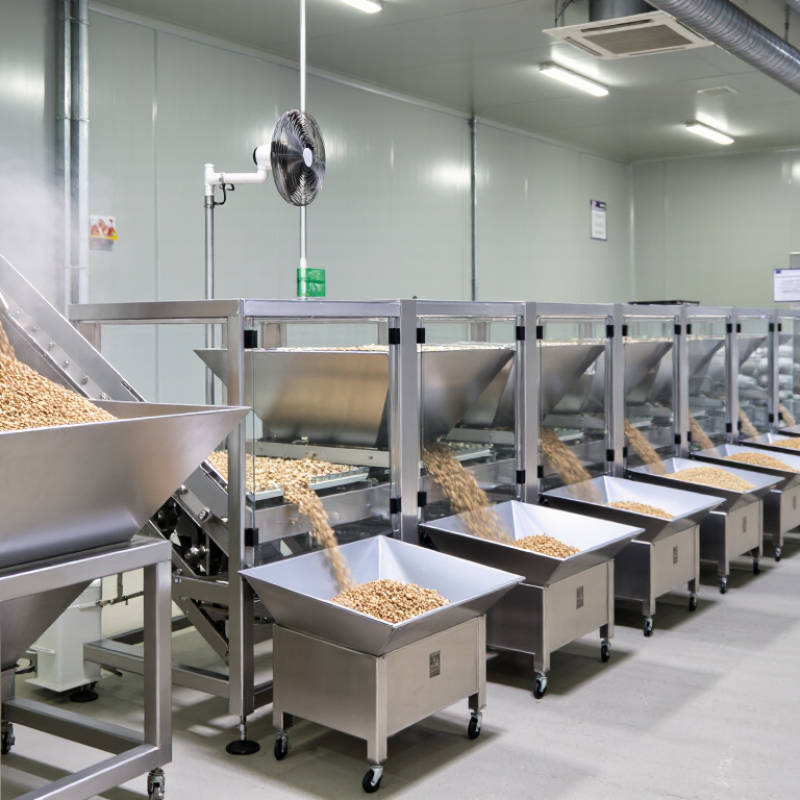
Seed cleaning equipment is a group of machines designed to remove unwanted materials from harvested seed. These materials may include dust, leaves, stalk pieces, stones, broken seed, and other crop particles. Clean seed supports accurate planting, storage stability, and more reliable quality checks.

The process usually begins in a receiving hopper. A pre-cleaner removes large debris with a coarse screen. Smaller screens then separate particles by width and thickness. An air aspirator lifts lighter materials, such as husks and dust, while heavier seed falls through. Some systems also use a gravity table to separate seed by density. Conveyors move the cleaned material between stages without excessive handling.

Airflow needs careful adjustment.

In practical use, operators inspect samples before and after cleaning. They check seed loss, remaining debris, moisture, and screen performance. A strong airflow may remove good seed with the waste. A weak airflow may leave chaff behind. Screen selection can also become a quiet source of error, especially when seed sizes vary within one lot. For this reason, experienced workers often make small adjustments, record the results, and test again rather than trusting one fixed setting. No machine cleans every crop perfectly. Regular maintenance, clear sample testing, and honest review of the final seed condition remain essential.
Why Seed Cleaning Is Important for Crop Quality

What Is Seed Cleaning Equipment and How Does It Work?

Why Seed Cleaning Is Important for Crop Quality

Seed cleaning equipment separates useful seed from dust, stones, weed seeds, damaged kernels, and plant debris. Air screens remove light material, while sieves sort seeds by size. Gravity tables then separate dense, well-filled seeds from shriveled ones. The process resembles careful grading at a kitchen table, but at industrial speed.

Clean seed matters. FAO’s State of Food and Agriculture reports that pests damage up to 40% of global crop production annually. Cleaning cannot solve every pest problem, but it can reduce weed-seed contamination and remove debris that shelters pathogens. The USDA’s Seed Regulatory and Testing Branch identifies purity, germination, and weed-seed content as key quality indicators. These measurements influence field emergence, stand uniformity, and later harvest performance.

A dusty batch may block a planter meter. Oversized kernels may create uneven spacing. Small impurities can also hide serious problems. No machine is perfect. Operators should inspect samples, adjust airflow, and recheck purity after each major setting change. Poor calibration can crack seed or discard valuable material. That mistake is easy to miss.

ISTA testing guidance also emphasizes representative sampling, because one clean scoop cannot describe an entire lot. In practical work, reliable results come from combining equipment, testing, and experienced observation. Clean seed gives seedlings a more even start, though field conditions still decide much of the final outcome.

What Is Seed Cleaning Equipment and How Does It Work? — Why Seed Cleaning Is Important for Crop Quality
Equipment or Stage What It Removes Working Principle Typical Operating Data Contribution to Seed Quality
Receiving Hopper Not a cleaning stage; receives harvested seed and regulates flow Uses a controlled feed gate or conveyor to deliver a steady product stream to the cleaning line Common holding capacity: approximately 1–10 metric tons, depending on system size Prevents surges and helps maintain consistent separation performance
Scalper or Pre-Cleaner Large materials such as stalks, cobs, stones, clods, and oversized trash A coarse perforated screen separates particles that are substantially larger than the seed Typical screen openings: about 4–20 mm, selected according to crop and impurity size Protects downstream equipment and reduces blockages before fine cleaning
Aspirator Dust, chaff, empty husks, light plant fragments, and other low-density particles An adjustable air stream lifts lighter material while heavier seed falls through the air column Airflow must be adjusted to avoid removing sound seed; performance depends on seed moisture and density Improves purity and reduces dust, which can support safer handling and storage
Indented Cylinder Materials that differ in length from the desired seed, such as broken kernels or weed seeds Indented pockets lift particles of a selected length and discharge them separately from the main seed flow Commonly used after basic screening; cylinder speed and indentation size are crop-specific Enhances physical purity when unwanted particles have a different length profile
Precision Screen Cleaner Undersized and oversized particles, including small weed seeds and broken seed Vibrating or oscillating screens classify material by width and thickness Usually fitted with multiple screen decks; screen selection must match seed dimensions Produces a more uniform seed lot and removes contaminants that may compete with the crop
Gravity Separator Light, immature, insect-damaged, shriveled, or low-density seed Combines an inclined vibrating deck with controlled upward airflow to separate particles by density Requires careful adjustment of deck angle, vibration, airflow, and feed rate Raises the proportion of well-developed seed and can improve planting-value consistency
Magnetic Separator Selected soil particles or weed seeds that can be conditioned to respond to magnetic separation Magnetic material is added to the seed surface; treated particles respond differently in a magnetic field Used only for specific separation problems; not a universal replacement for screens or air separation Can remove certain difficult contaminants when conventional size and density separation is insufficient
Color Sorter Discolored, mold-affected-looking, stained, or visibly damaged seeds Cameras detect color or appearance differences, and precisely timed air jets eject selected particles Requires stable lighting, calibrated sensitivity, and a relatively even product flow Improves visual uniformity and can remove seeds with undesirable external appearance
Seed Treater Not a physical cleaning stage; applies approved protective treatments after cleaning A measured liquid, powder, or biological treatment is distributed over the cleaned seed Treatment rate is normally expressed per unit of seed mass and must follow the product label Supports protection against certain seed-borne or soil-borne risks when used correctly
Final Inspection and Sampling Detects remaining foreign material, damaged seed, and non-uniformity Representative samples are inspected and tested for purity, moisture, germination, and other quality indicators Testing methods and acceptance limits vary by crop, market, and applicable seed regulations Confirms whether the cleaned lot meets its intended quality specification
Typical Cleaning Sequence Multiple impurity types in a single harvested lot Large debris is removed first, followed by air, size, length, density, and appearance separation as needed Example sequence: hopper → pre-cleaner → aspirator → screen cleaner → gravity separator Combining complementary separation principles generally gives better results than relying on one machine
Key Quality Indicators Foreign material, weed seeds, broken seed, low-density seed, excess moisture, and uneven seed size Quality is evaluated through physical inspection and laboratory or in-house testing Important measures include physical purity, germination percentage, vigor, moisture content, and thousand-seed weight Helps improve stand establishment, reduce competition from weeds, and support consistent crop development
Note: Actual capacity, screen size, airflow, and separation efficiency depend on crop type, seed moisture, impurity level, machine configuration, and operator settings. Seed cleaning improves physical quality, but it does not by itself guarantee high germination or eliminate all pathogens.

How Seed Cleaning Equipment Separates Different Materials

What Is Seed Cleaning Equipment and How Does It Work?

Seed cleaning equipment separates harvested seed from materials that reduce quality, planting value, or storage stability. The process uses differences in size, weight, shape, density, and airflow response.

A scalper removes large items, such as stems and cobs, through wide openings. Smaller screens then remove sand, broken seed, and undersized particles. An aspirator lifts light chaff with controlled air while heavier seed falls into a separate stream.

More precise machines use gravity tables or indented cylinders. A gravity table spreads seed across a vibrating deck. Dense, mature seed moves differently from light or damaged seed. An indented cylinder separates materials by length, including round seed and weed seed. Operators must adjust airflow, screen size, vibration, and feed rate carefully. Small errors can remove valuable seed.

The FAO’s 2019 State of Food and Agriculture report estimated that 14% of food is lost between harvest and retail. Cleaning cannot solve every loss, but it can reduce avoidable contamination before storage.

The OECD-FAO Agricultural Outlook 2024–2033 projects global cereal production to approach 3.2 billion tonnes by 2033, increasing pressure on consistent seed handling.

These figures describe broad supply conditions, not equipment performance. Real results depend on crop moisture, variety, machine calibration, and operator experience. Field testing remains essential. Perfect separation is rarely realistic.

Key Stages in the Seed Cleaning Process

Seed cleaning equipment removes unwanted materials from harvested seed through several controlled stages. The process protects seed quality, improves planting performance, and supports safer storage.

The cleaning line usually begins with pre-cleaning. A coarse screen removes straw, leaves, cobs, and large stones. Smaller screens then separate seed by width and thickness. Air aspiration lifts lighter materials, such as dust, empty husks, and weak seed. Some systems use an indented cylinder to separate seed by length. A gravity table can remove immature or damaged seed by density. Each stage needs careful adjustment. Excessive airflow may carry away good seed. Gentle airflow may leave too much chaff behind. Operators should check samples between stages, not rely only on machine settings.

Tips: Keep screens dry and free from blocked openings. Measure seed moisture before cleaning, because damp material can reduce separation accuracy. Inspect rejected material regularly. It may reveal valuable seed losses or poor calibration. Keep records of screen sizes, airflow, and throughput for later comparison.

No setting works perfectly. Crop variety, field conditions, and harvest timing change the results. Even experienced operators sometimes need to repeat a stage or accept a small compromise between cleanliness and recovery. Clean equipment after each batch to prevent mixing and preserve reliable quality checks.

Common Types and Uses of Seed Cleaning Equipment

What Is Seed Cleaning Equipment and How Does It Work?

Seed cleaning equipment removes unwanted material from harvested seed lots. It separates seeds by size, weight, shape, and density. A cleaner may remove dust, straw, soil, broken seeds, and light chaff.

An air-screen cleaner is widely used on farms and in processing facilities. Screens sort seeds by width, while controlled airflow lifts lighter debris. Operators usually adjust the fan after checking the seed sample. Too much air can carry away valuable seeds. Too little air leaves chaff behind. Small screens suit vegetable seeds, while larger openings handle grains and pulses.

A gravity separator sorts seeds with similar sizes but different densities. Heavy, mature seeds move differently from hollow or damaged seeds. This equipment helps improve planting quality. A destoner removes stones and other heavy particles from grain. Its vibrating deck and airflow create a separation pattern that needs careful leveling. Some facilities also use spiral separators for round or irregular seeds. They can separate seed shapes that screens cannot handle well.

Each machine has a specific role. In practice, combining two or three cleaning methods often produces better results. No system removes every defect. Moisture, crop variety, and uneven feeding can reduce accuracy. I have found that a clean sample and steady feed rate matter as much as machine capacity. Regular inspection also prevents hidden losses during cleaning.