
Choosing a Traction Lift is a building-performance decision, not merely an equipment purchase. It affects passenger flow, energy use, comfort, maintenance access, and long-term operating costs. The International Energy Agency reported that buildings and construction consumed approximately 30% of global final energy in 2022. Every major system deserves scrutiny.
A Traction Lift uses ropes, sheaves, and a motor to move the car. It can serve low-, mid-, or high-rise buildings efficiently, especially where speed and travel distance matter. However, the correct choice depends on more than rated capacity. Floor population, peak traffic, shaft dimensions, machine-room requirements, regenerative drives, standby controls, and local maintenance capability all deserve review. The European Lift Association’s energy-efficiency guidance identifies lifts as a meaningful part of building electricity demand, particularly in busy commercial properties. The exact percentage varies by building type and usage. That detail is easy to overlook.
As elevator-industry analyst Dr. Rory Smith has stated, “Elevators are the most important form of transportation in the world.” His observation gives the selection process practical weight. A lift failure can delay workers, disrupt deliveries, and leave residents waiting beside a silent landing door. Experience matters here. So does evidence.
A credible specification should compare traffic simulations, lifecycle energy estimates, acoustic performance, emergency operation, and service response times. Manufacturer brochures alone are insufficient. The first proposal may look perfect, but it rarely is. Building owners should challenge optimistic assumptions, verify references, and ask who will maintain the system after installation. A carefully selected Traction Lift should move people reliably today and remain supportable years later.
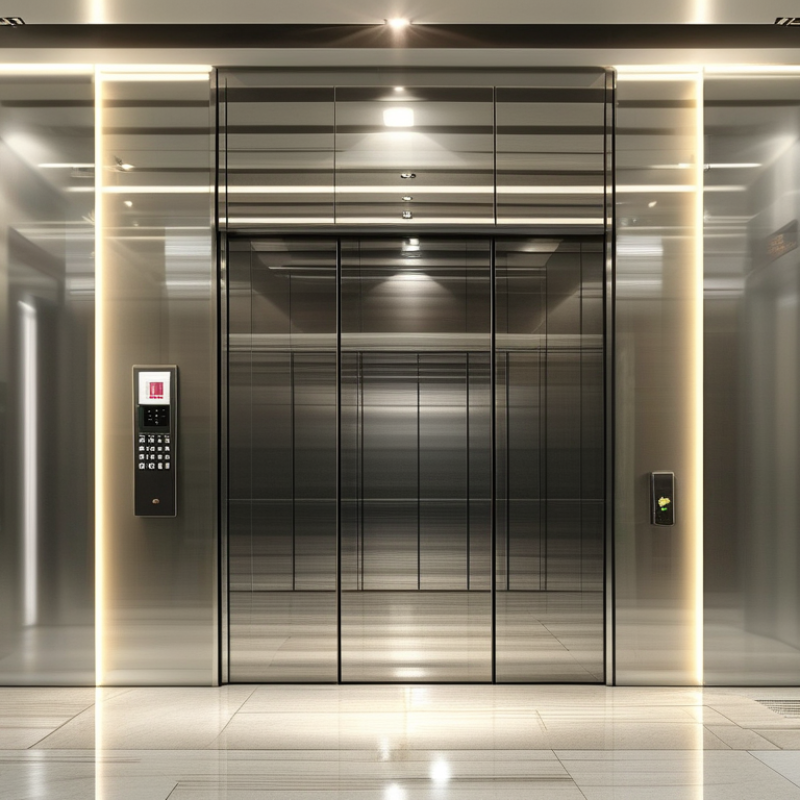
How to Choose a Traction Lift for Your Building?
Define Your Building’s Lift Requirements
Start with people, not lift speed. Record the building’s height, floor count, occupancy, and daily traffic patterns. A 20-storey office needs different planning from a six-storey apartment building. Note busy periods, delivery movements, accessibility needs, and future occupancy growth.
Use measurable targets. CIBSE Guide D: Transportation Systems in Buildings recommends reviewing five-minute handling capacity, average waiting time, and interval during peak traffic. For example, a 900-person office may need stronger morning handling than evening performance. A simple spreadsheet helps. It can still mislead. Real observations matter.
Measure the route carefully. A traction lift may suit taller buildings because it supports longer travel and efficient speed control. Confirm shaft dimensions, overhead clearance, pit depth, machine-room space, electrical capacity, and structural loads. ISO 25745-2 provides a framework for evaluating lift energy performance, including standby and running conditions. Request calculations for both.
Do not size only for today. Review evacuation planning, fire-service access, stretcher dimensions, wheelchair turning space, and local safety requirements with qualified professionals. The 2023 Global Status Report for Buildings and Construction reports that buildings account for around 30% of global final energy demand, so energy use deserves early attention. Choose the traction system after defining these requirements, not before.

Choosing a traction lift starts with traffic, not catalogue speed. Geared traction suits many mid-rise buildings with moderate demand. Gearless traction supports taller buildings and frequent, fast service. Machine-room-less traction can release valuable roof space. However, its maintenance access needs careful planning.
CIBSE Guide D: Transportation Systems in Buildings (2020) estimates that lifts may use 2–10% of a building’s energy. The range is broad. Actual consumption depends on travel height, passenger flow, standby settings, and control strategy.
Compare the drive system, too. Variable-voltage, variable-frequency drives provide smoother starts and better leveling. Regenerative drives can return braking energy to the electrical system. Their value increases in busy buildings with heavy downward traffic.
ISO 25745-2 evaluates lift energy performance through travel demand and standby consumption. Ask suppliers for measured operating assumptions, not only a laboratory rating. A lift that looks efficient on paper may perform poorly during long idle periods. This is where early advice can be wrong.
Tips Match capacity to five-minute traffic demand. Check peak waiting times. Review daily travel cycles. Confirm machine-room access and replacement routes. Request noise data for bedrooms and offices. Compare standby consumption in watts. Keep an allowance for future occupancy. I would also inspect existing shafts before choosing MRL equipment; small dimensional errors become expensive surprises.
Choosing a traction lift starts with the building’s daily pattern, not a brochure rating. Estimate the heaviest regular load, including passengers, carts, maintenance tools, and seasonal deliveries. Select capacity with a measured margin, but avoid oversizing without evidence. A larger car can increase structural demands, energy use, and purchase cost. Review accessibility and safety requirements with a qualified lift engineer.
Speed should match travel height and waiting tolerance. A six-storey office may need moderate speed, while a tall residential building can justify faster service. Yet higher speed does not automatically improve traffic flow. Door time, dispatch controls, and acceleration also affect each journey. Request a full ride-time calculation, including stops. Shorter is not always better.
Travel height influences motor duty, rope arrangement, guide-rail design, and emergency planning. Traffic analysis should examine morning arrivals, lunch movement, deliveries, and peak departures. A simple passenger count can miss school runs or clinic equipment. Use observed data where possible. If data is unavailable, state the assumption clearly. That weakness matters. Test several traffic scenarios, then compare capacity and speed together. A lift that performs well on paper may still leave a crowded lobby at 8:30 a.m. Plan space for queues, service access, and future changes in occupancy.
Assess the shaft before comparing lift capacities. Measure the pit, overhead clearance, machine-room area, and access route for equipment. CIBSE Guide D stresses that transportation planning must match the building’s structure, traffic pattern, and maintenance strategy. A traction lift needs careful overhead coordination. In tight sites, limited clearance can force costly structural changes. That detail is easy to miss.
Energy use deserves equal attention. The U.S. Department of Energy estimates that elevators and escalators can consume 2–10% of a commercial building’s electricity. Ask for standby consumption, drive efficiency, lighting controls, and regenerative operation data. ISO 25745-2 provides a framework for evaluating elevator energy performance. However, a lower rated figure may not reflect real usage. Peak traffic, frequent starts, and poor scheduling can change results.
Safety features should be verified, not simply listed. Check door protection, emergency communication, overspeed protection, controlled access, and safe maintenance spaces. EN 81-20 and ASME A17.1/CSA B44 provide widely recognized safety requirements for lift design and operation. Request inspection records and test procedures from qualified professionals. A practical site survey often reveals hazards that drawings hide. Do not assume a compliant component makes the whole system safe. The complete installation matters.
A traction lift should be judged by its full operating cost, not its purchase price. A low quotation may exclude controls, installation changes, testing, or freight. Ask for a five-year cost plan with energy use, inspections, servicing, and likely repairs. In a busy office, daily journeys can quickly expose weak efficiency assumptions. Request calculations based on your building’s passenger traffic, travel height, and duty cycle. A spreadsheet can still mislead.
Maintenance needs deserve close attention. Check recommended service intervals for ropes, brakes, sheaves, door systems, and safety circuits. Ask whether technicians can diagnose faults remotely or need repeated site visits. Keep a clear record of response times, replaced parts, and recurring failures. I would not choose the cheapest maintenance contract without reviewing its exclusions. Emergency call-outs may cost more than expected. That detail matters.
Supplier support is part of the lift itself. Confirm local technician coverage, spare-parts availability, training, and escalation procedures. Ask for a written response-time commitment, especially for residential or medical buildings. Speak with recent customers about delayed repairs, communication, and handover quality. Also check whether technical drawings and maintenance records remain accessible after installation. Support often sounds excellent during sales discussions, then becomes less precise later. That is worth challenging.
JK Machinery a.s.
Psohlavců 322/4, Praha 4,
Czechia
T: +420 777 610 380
E: sale@roll-formingmachinery.com