What Is Hot Dip Galvanized Steel Coil and Its Types?
Hot Dip Galvanized Steel Coil combines a cold-rolled or hot-rolled steel substrate with a metallurgically bonded zinc coating. The coil passes through a molten zinc bath, commonly near 450°C, before cooling and inspection. This process creates a practical shield against moisture, oxygen, and industrial pollutants. More importantly, zinc can provide sacrificial protection when scratches expose the underlying steel.
The World Steel Association reported approximately 1.89 billion tonnes of crude steel production in 2023. That scale explains why corrosion control cannot depend on paint alone. The NACE IMPACT study estimated global corrosion costs at about US$2.5 trillion annually, equal to roughly 3.4% of global economic output. These figures are broad, however. They should not be treated as exact predictions for every galvanized application. The distinction matters.
Dr. Gregory Zhang, a zinc-industry technical expert, describes the mechanism simply: “Zinc protects steel through both barrier protection and sacrificial protection.” His statement helps explain why Hot Dip Galvanized Steel Coil remains common in construction, automotive components, appliances, solar structures, and ventilation systems. Industry standards, including ASTM A653 and EN 10346, classify products by coating mass, steel grade, surface condition, and intended use. Common types include regular spangle, minimized spangle, zero spangle, and alloyed zinc-iron coatings.
A bright surface is not proof of superior performance. Coating mass, edge condition, forming requirements, and the surrounding environment require closer inspection. This article examines what Hot Dip Galvanized Steel Coil is, how its production works, and which type fits different service conditions. Small details often decide long-term durability.
What Is Hot Dip Galvanized Steel Coil?
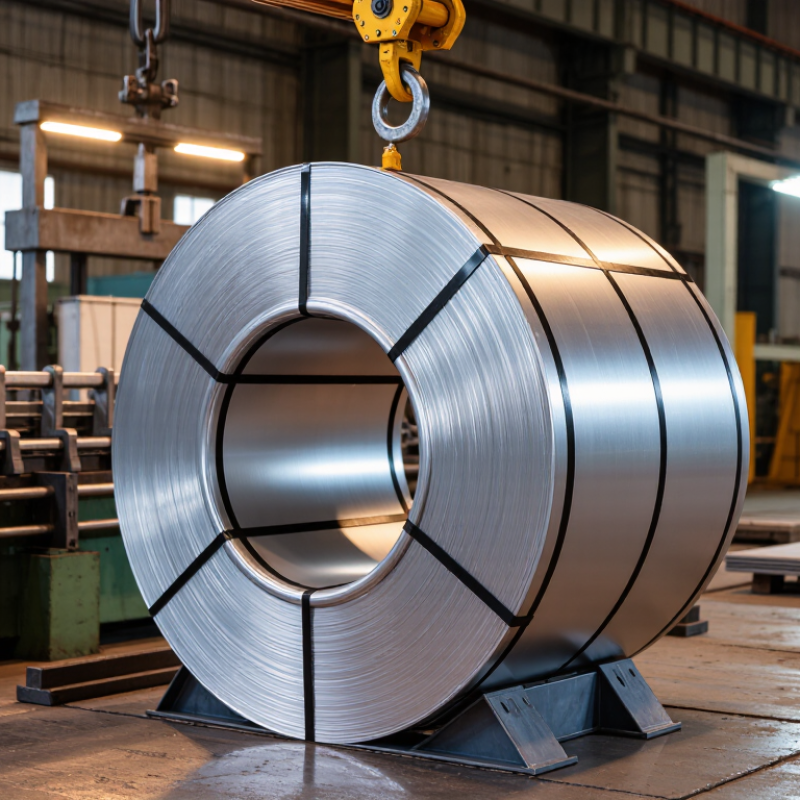
Hot dip galvanized steel coil is flat steel strip coated with zinc through a continuous immersion process. The steel passes through a bath of molten zinc, usually near 450°C. Zinc bonds with the iron surface and creates protective alloy layers. A pure zinc layer remains on the outside.
After cooling, the coated strip is recoiled for transport or further forming. Its zinc layer protects exposed steel by acting as a barrier and offering sacrificial protection. Small scratches may still receive protection from nearby zinc. The coil is commonly used for roofing panels, ductwork, automotive parts, fencing, and structural components.
Several types exist. They may differ by steel grade, zinc coating mass, surface finish, or spangle appearance. Regular spangle shows visible crystal patterns, while minimized-spangle surfaces look more uniform. Some coils receive skin-pass treatment for better flatness and appearance. Others are lightly oiled to reduce storage staining.
A bright surface proves little by itself. Coating mass, thickness, adhesion, flatness, and edge condition require proper inspection. In practical production, forming radius and welding behavior also matter. A heavier zinc layer is not always the best choice. It can affect forming, cost, and welding performance. Specification and actual service conditions should guide selection, although this decision is sometimes rushed.
How Is Hot Dip Galvanized Steel Coil Manufactured?
Hot-dip galvanized steel coil begins as cold-rolled or hot-rolled strip. In a continuous line, operators unwind the coil and remove oil, rust, and mill scale. Alkaline cleaning is followed by water rinsing and acid pickling. A flux layer helps molten zinc wet the steel surface. The strip then passes through a zinc bath near 450°C. Air knives control coating thickness as the strip exits. The timing matters.
The coating solidifies through cooling and forms a protective zinc layer. Some lines add passivation or oil to reduce white rust during storage. ASTM A653/A653M identifies G90 as about 0.90 oz/ft², or 275 g/m², across both surfaces. This figure is useful, but it does not replace production inspection. World Steel Association data recorded approximately 1.89 billion tonnes of crude steel production in 2023. That scale makes stable galvanizing control essential, not optional.
Common coil types include regular-spangle, minimized-spangle, and galvannealed products. Galvannealed coil receives additional heat after dipping, allowing iron to diffuse into the zinc layer. Inspectors check coating mass, surface continuity, edge quality, and adhesion. USGS Mineral Commodity Summaries 2024 estimated global zinc mine production at roughly 13 million tonnes in 2023. Zinc supply affects cost and planning. The process also has imperfections: trapped moisture, poor cleaning, or uneven air pressure can create bare spots. A bright surface alone cannot prove reliable protection.
What Are the Main Types of Galvanized Steel Coil?
Hot dip galvanized steel coil is carbon steel coated with molten zinc. The process creates a protective layer that slows rust and extends service life. The main types differ by surface appearance, coating structure, and steel grade.
Regular-spangle coil has visible zinc crystals and suits general construction.
Minimized-spangle coil offers a smoother appearance.
Zero-spangle coil has an almost uniform surface, making it useful for painting and visible panels.
Galvannealed coil is heat-treated after galvanizing. Its zinc-iron coating provides strong paint adhesion and good weldability. It is common in formed parts and vehicle components.
Coils also vary by coating weight, such as lighter coatings for indoor use and heavier coatings for humid or outdoor environments. Base steel grades include commercial quality, forming quality, and structural quality. Each grade supports different levels of bending and load resistance.
The choice is not automatic. One missed forming requirement can cause cracking, peeling, or poor paint performance.
Tips: Check the required coating weight, steel grade, coil width, and surface finish before ordering. Ask for inspection records and verify thickness at several points. Store coils on dry supports, away from standing water. A perfect surface is not always the best choice. For deep forming, ductility may matter more than appearance. Consult a qualified engineer when exposure, welding, or repeated bending is involved.
How Are Galvanized Steel Coil Types Classified?
Hot dip galvanized steel coil is produced by passing prepared steel through molten zinc. The zinc layer protects the substrate from moisture and atmospheric corrosion. Classification, however, depends on more than the coating process. It requires a close look at coating mass, steel grade, surface finish, and post-treatment.
Coating mass is often the clearest category. Under EN 10346, designations such as Z100, Z275, and Z600 indicate the total zinc mass on both surfaces, measured in grams per square metre. A Z275 coating contains about 275 g/m² of zinc. Heavier coatings generally support longer outdoor service, but forming demands and welding behavior also matter. The International Zinc Association notes that coating thickness should match exposure conditions, not simply follow the largest available number.
Steel grade creates another division. Commercial-quality grades suit general panels and ducts. Forming grades support deeper bends, while structural grades target load-bearing components. Surface appearance also separates coils. Regular spangle, minimized spangle, and zero-spangle finishes can differ in texture and paint response. Chemical passivation, oiling, or dry treatment adds another classification layer.
Industry scale helps explain the market. The World Steel Association reported approximately 1.89 billion tonnes of crude steel production in 2023. The USGS Mineral Commodity Summaries 2024 estimated global mined zinc output at 12.3 million tonnes that year. These figures show a large material system, but they do not identify coil type. That distinction is easy to miss. In practice, a purchase specification should state coating designation, steel grade, surface treatment, dimensions, and inspection requirements. Some specifications remain vague, and that can create avoidable disputes.
What Are the Common Applications of Galvanized Steel Coil?
Hot dip galvanized steel coil is made by passing cleaned steel through molten zinc. The zinc layer slows rust caused by moisture, air, and mild industrial exposure. Common types include regular spangle, zero-spangle, and zinc-iron alloy surfaces. Each type suits different forming, painting, and appearance requirements.
Coating weight also matters. A heavier coating can improve durability, but it may influence welding, bending, and overall cost.
Galvanized coil serves construction, transportation, manufacturing, and agriculture.
Builders use it for roofing panels, wall cladding, gutters, ventilation ducts, and light-gauge framing. Its reflective surface can help reduce heat absorption on exposed panels. Vehicle producers use galvanized steel for body panels, brackets, and underbody components. Appliance makers often choose it for housings, backs, and internal supports. Farms use it for grain bins, fencing, storage equipment, and irrigation parts.
Manufacturers can slit, stamp, or roll-form the coil for precise production. A common mistake is choosing by shine alone. Indoor locations can still contain condensation and corrosive chemicals.
Tips: Store coils on dry supports, not wet concrete. Keep packaging intact until processing. Check edges for scratches before installation. Match the coating weight to the environment, not only the lowest price. During fabrication, repair exposed steel areas with a suitable zinc-rich treatment. No coating is perfect. Regular inspection still matters.