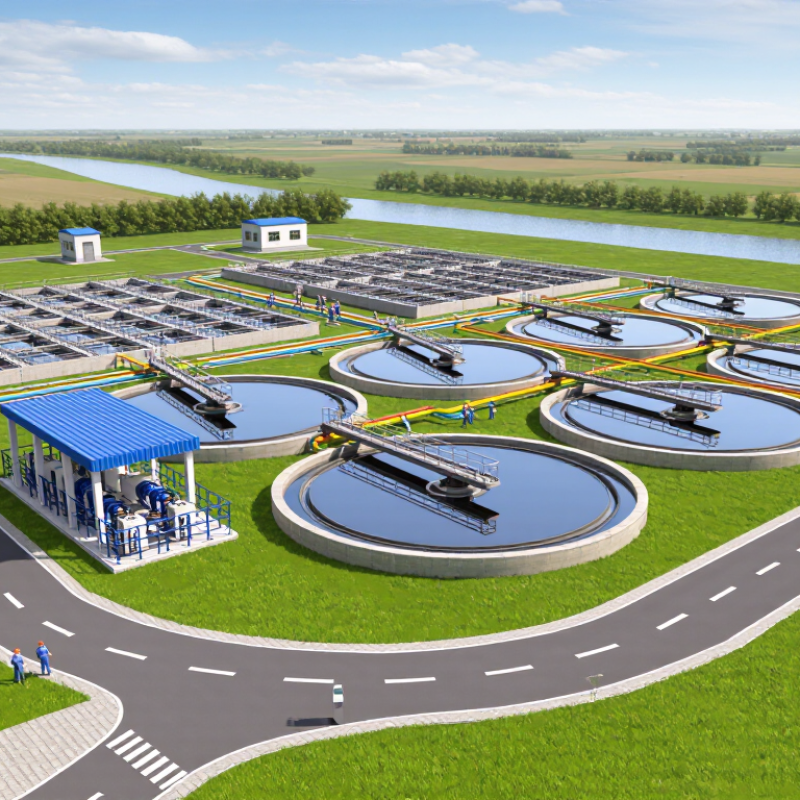
Choosing the best Treatment Plant in 2026 is not a matter of picking the newest equipment. It means matching proven processes to your water source, discharge goals, operating skills, and budget. A municipal facility facing seasonal flow surges has different needs from an industrial site treating variable wastewater. The right choice should work on an ordinary Tuesday, not only in a polished demonstration.
Professor Mark van Loosdrecht, a wastewater-treatment specialist at Delft University of Technology, is often associated with the principle, “Wastewater is a resource, not a waste.” That idea points buyers toward more than removal rates. Ask how a plant handles sludge, energy use, odor, maintenance access, and changing influent quality. Look for documented performance data, clear process diagrams, and references from facilities with similar conditions. A shiny control panel is not proof.
The details matter. Can a technician reach the pump without dismantling a walkway? Are spare parts available locally? What happens after a power interruption? These questions reveal practical strengths that brochures may skip. Be cautious with guarantees that lack operating assumptions or independent verification. Even a well-designed system can disappoint when staff training or sampling plans are weak. And no single technology is best everywhere. This guide outlines how to compare treatment performance, lifecycle costs, reliability, and supplier support, then weigh the trade-offs before choosing. Some answers may remain uncertain until site testing begins; that is worth admitting early.
Define what the treated water must do before comparing equipment. Start with the water. Is it intended for discharge, irrigation, industrial reuse, or potable supply? Each use calls for different limits and monitoring. List required parameters, such as suspended solids, nutrients, microbes, salinity, or specific metals. Then record current and peak flows, including wet-weather surges and seasonal changes. A plant sized only for an average day may struggle after a storm. Small detail, big consequence.
Translate those goals into the standards and permit conditions that apply at the site. Requirements vary by jurisdiction, receiving water, reuse pathway, and project date, so confirm them with the relevant authority and a qualified process engineer. Check final concentration limits, sampling frequency, reporting rules, temperature ranges, and upset-response requirements. Use recent laboratory results, and note how samples were collected; one clean bottle is not a reliable picture. Build a compliance margin, but avoid inflating targets without reason, since extra treatment can raise energy use and sludge production. Revisit assumptions after pilot data. Design forecasts are useful, but rarely perfect.
A treatment plant should fit the site as it exists, not just the site on a drawing. Check soil stability, groundwater, flood exposure, access for service vehicles, and the distance to power and discharge points. A low corner may look convenient until heavy rain turns it into a pond. Small details matter. Walk the site in wet weather, and ask operators how seasonal flows change.
Capacity needs more than today’s average flow. Measure daily peaks, weekend patterns, incoming pollutant loads, and likely growth from housing or industry. The U.S. EPA’s 2022 Clean Watersheds Needs Survey estimated $630.1 billion in wastewater and stormwater infrastructure needs over 20 years, underscoring the scale of long-term planning. UN-Water’s 2024 SDG 6 update reported that 42% of household wastewater was not safely treated in 2022. These figures are not sizing formulas, but they show why reliable treatment and future demand matter. A spreadsheet alone can mislead.
Tips: Compare average and peak flow records, then model a realistic growth scenario for the next 10 to 20 years. Check whether modules can be added without major shutdowns. Leave space for tanks, pipes, and maintenance access. Plan for peaks. Ask a qualified process engineer to verify assumptions against local sampling and site data. Forecasts are guesses, too; revisit them when conditions change.
| Assessment dimension | Data to collect | How it affects plant selection | Practical planning check |
|---|---|---|---|
| Current and future flow | Average daily flow, seasonal variation, peak-hour or peak-day flow, and known wet-weather inflow and infiltration. | Hydraulic capacity must accommodate both typical operating conditions and relevant peak flows without bypassing or compromising treatment. | Estimate average flow from population and non-residential contributions, then add measured or locally estimated inflow and infiltration. Confirm peak-flow design criteria with the permitting authority. |
| Pollutant loading | Influent BOD5, suspended solids, ammonia, total nitrogen, total phosphorus, and any industrial contaminants. | Plants are sized for both flow and pollutant mass. A high-strength or industrial wastewater stream can require different processes or pretreatment even when flow is modest. | Use representative sampling across seasons and operating shifts. For preliminary domestic estimates only, commonly used planning ranges are about 40–60 g BOD5 and 50–70 g suspended solids per person per day; verify local design values. |
| Population and demand growth | Current connected population, approved development, service-area plans, expected connection schedule, and credible high-growth scenarios. | Future demand determines the required ultimate capacity and whether staged expansion is more appropriate than building the entire plant at the outset. | Prepare low, central, and high demand forecasts for the planning horizon required by local authorities. Document assumptions about population, connections, water use, and industrial demand. |
| Available site area | Usable land, boundaries, access roads, easements, nearby homes, topography, and space reserved for future units. | Land-intensive processes may be unsuitable on constrained sites; compact systems can reduce footprint but may require more mechanical equipment and operational attention. | Include process units, access, odor-control equipment, sludge handling, stormwater measures, setbacks, and a realistic expansion area in the site plan. |
| Ground and flood conditions | Geotechnical investigation, groundwater level, soil permeability, seismic conditions where relevant, drainage, and mapped flood hazards. | Weak soils, high groundwater, flood exposure, or difficult excavation can affect construction cost, equipment layout, and the reliability of below-grade structures. | Complete site investigations before final process selection. Check local flood requirements and establish protection for electrical and control equipment. |
| Effluent requirements and receiving environment | Discharge permit limits, receiving-water sensitivity, seasonal temperature, reuse standards, and any nutrient or disinfection requirements. | Required effluent quality determines the treatment train. Nutrient removal, filtration, or disinfection may be necessary depending on permits and intended reuse. | Confirm applicable limits with the responsible regulator. Do not assume that a process meeting typical secondary-treatment performance will meet site-specific discharge or reuse requirements. |
| Treatment process fit | Influent variability, operator availability, land constraints, desired effluent quality, and tolerance for mechanical complexity. | Activated sludge can provide flexible biological treatment but needs aeration and process control. Sequencing batch reactors combine treatment stages in timed cycles. Stabilization ponds can be land-intensive and climate-dependent. Membrane bioreactors can produce high-quality effluent but require membrane maintenance and energy. | Compare processes on lifecycle cost, local operating experience, process performance, expandability, and resilience—not purchase price or footprint alone. |
| Power and energy reliability | Grid availability, outage frequency, electricity cost, backup-power needs, and expected aeration and pumping loads. | Aeration and pumping are major energy uses in many activated-sludge plants. Unreliable power can require backup generation, storage, or process choices suited to local operating conditions. | Request an energy estimate at both average and peak loading. Include standby power and critical equipment in reliability planning. |
| Sludge handling and disposal | Expected sludge production, thickening and dewatering options, transport distance, permitted disposal routes, and local reuse opportunities. | Every biological treatment plant produces residual solids. Available disposal capacity and transport costs can influence process choice and long-term operating costs. | Identify a permitted, practical sludge destination before design approval. Include handling, storage, testing, transport, and disposal in the operating plan. |
| Operations and maintenance capacity | Operator staffing, training, laboratory access, spare-parts availability, maintenance support, and remote-monitoring capability. | More automated or mechanically intensive systems may perform well but still depend on trained operators, routine maintenance, and timely access to parts. | Match process complexity to the capacity of the organization that will operate the plant. Budget for staffing, training, monitoring, and planned equipment replacement. |
| Phasing and expandability | Expected timing of new connections, construction constraints, land reserved for expansion, and modular equipment options. | Staged construction can align capital spending with actual growth, provided the initial layout and hydraulic structures allow future expansion. | Check that later phases can be added without interrupting essential treatment. Assess both the initial operating range and the ultimate design capacity. |
| Lifecycle cost and resilience | Capital cost, energy, chemicals, staffing, maintenance, replacement cycles, climate risks, and consequences of treatment interruption. | The lowest initial-cost option may have higher operating costs or greater exposure to outages, extreme weather, or supply-chain delays. | Compare lifecycle costs using consistent assumptions and evaluate resilience measures such as backup power, process redundancy, flood protection, and critical-spares planning. |
| Planning note: The values and process descriptions above are preliminary screening guidance, not final design criteria. Final capacity, treatment performance, and permitting requirements should be established by qualified engineers using site-specific data and applicable local regulations. | |||
A treatment plant should be chosen by matching its process to incoming water, discharge limits, reuse goals, and available operators. Conventional activated sludge is familiar and adaptable, but it may need extra filtration when reuse requires very low solids. Membrane bioreactors combine biological treatment with membrane filtration. The U.S. EPA’s Membrane Bioreactors Fact Sheet reports effluent levels below 5 mg/L BOD, below 1 mg/L suspended solids, and below 0.2 NTU turbidity. Strong numbers. They are reported outcomes, not promises for every site.
Nutrient removal also changes the comparison. The EPA’s Nutrient Control Design Manual explains how biological nitrogen and phosphorus removal depends on factors such as temperature, available carbon, and process control. A cold winter or variable inflow can challenge a design that looks excellent on paper. I would not trust one clean effluent figure alone. Ask for performance data across seasons, including energy use, chemical demand, sludge production, and downtime.
Energy deserves equal attention. The International Energy Agency’s 2016 Water-Energy Nexus report estimates that water-related services account for about 4% of global electricity use. That figure covers more than treatment plants, but it shows why pumping and aeration matter. Compare measured energy per cubic metre alongside effluent quality. A compact membrane system may suit limited land, while ponds or wetlands can reduce mechanical complexity where land and climate allow. The trade-off is real, and sometimes inconvenient.
Choosing a treatment plant in 2026 means looking beyond its purchase price. Estimate the full cost of ownership, including installation, energy, chemicals, operator training, maintenance, and replacement parts. Ask suppliers for clear assumptions behind each estimate. A low bid can become expensive.
Reliability should be checked against operating records, not promises. Review uptime data, maintenance logs, and performance during peak flows or difficult weather. Ask how quickly common parts can be replaced and whether the system has backup capacity. Small details matter. A pump failure at night can affect service long before anyone notices a trend in monthly reports.
Environmental impact needs the same practical scrutiny. Compare energy use, chemical demand, sludge production, and the quality of treated water under realistic conditions. Request monitoring data and clarify how results were measured. Consider the plant’s local setting, too: water scarcity, discharge limits, and nearby communities can change what “best” means. I would not trust a tidy spreadsheet alone. Estimates can miss operator workload or seasonal swings, and those gaps deserve a second look. A careful comparison may take longer, but it gives decision-makers a more dependable basis for choosing.
Typical removal ranges for conventional municipal wastewater treatment stages
Primary treatment typically removes about 25–40% of BOD₅ and 50–70% of total suspended solids (TSS); secondary treatment typically removes about 85–95% of both. These are indicative engineering ranges, not guaranteed plant results. Compare life-cycle costs, operator needs, redundancy, and permit requirements separately: removal performance alone does not establish a plant’s cost or reliability.
Sources: U.S. EPA, Primer for Municipal Wastewater Treatment Systems; 40 CFR Part 133. Actual performance varies with influent wastewater and plant design.
Before comparing capacity or price, verify who will design, build, and support the plant. Request current business registrations, relevant project references, and qualifications for the engineers handling your process. Then contact at least one past client and ask whether the equipment performed as specified after commissioning. Paper can look convincing. A site visit, when practical, can reveal details a proposal misses, such as maintenance access, spare-parts storage, and clear equipment labels. Check that reference projects treated water with similar quality and flow conditions; a much larger installation may not be a useful comparison.
Support matters after handover, not just during sales calls. Ask who responds to alarms, how quickly technicians can attend, and which parts are stocked locally. Get service responsibilities, response times, training, and warranty limits in writing. Request examples of inspection reports, operating manuals, and maintenance schedules. Also review the supplier’s compliance records against the requirements that apply to your location and project. Confirm that permits, test results, and equipment documentation are complete and traceable. Ask how changes to design or materials are recorded. Some records may be incomplete; treat that as a reason to ask clear follow-up questions, not as automatic proof of poor performance. A careful supplier should explain gaps plainly and show how they will be addressed.
JK Machinery a.s.
Psohlavců 322/4, Praha 4,
Czechia
T: +420 777 610 380
E: sale@roll-formingmachinery.com