How to Choose the Right Photoelectric Sensors for Your Needs?
Choosing the right Photoelectric Sensors is crucial for various industrial applications. According to a report by MarketsandMarkets, the global photoelectric sensors market is projected to reach $2.89 billion by 2025. This growth highlights their importance in automation and process control. Selecting the appropriate type can enhance efficiency and safety in operations.
Photoelectric sensors come in various types, including diffuse, retro-reflective, and through-beam sensors. Each type serves different purposes, requiring careful consideration based on project specifications. For example, using a diffuse sensor might be effective for short-range detection. However, it may not provide the same performance level over longer distances, leading to potential operational inconsistencies.
Inadequate selection of photoelectric sensors can lead to increased downtime and operational costs. Often, users overlook environmental factors affecting sensor performance. In demanding conditions, a sensor's dust-resistance or moisture-proof rating becomes essential. Therefore, understanding application needs is vital. Proper selection not only ensures functionality but also promotes longevity and reliability in the field.
Understanding the Basics of Photoelectric Sensors and Their Functions
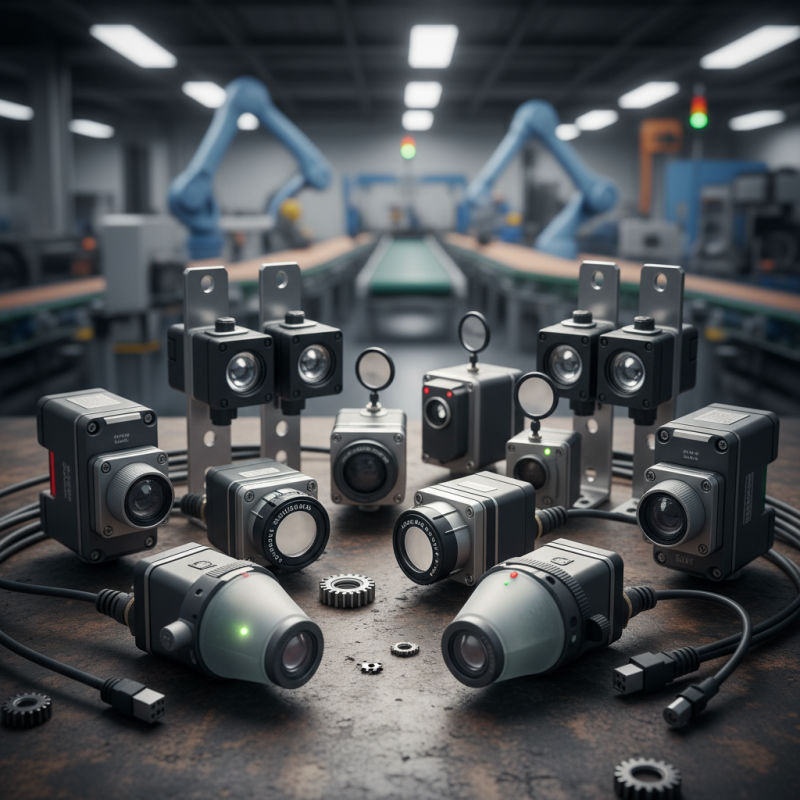
Photoelectric sensors are key components in many automation systems. They detect objects without direct contact, offering versatility in various applications. Understanding their basic functions helps in making the right choice. There are different types of photoelectric sensors: through-beam, retro-reflective, and proximity. Each serves distinct purposes often based on the environment and object types involved.
Tips: Always consider the operating distance required in your application. This affects the type of sensor you need. Check the sensing ranges closely; it can save frustration later. Additionally, pay attention to the ambient light conditions where the sensor will be used. Environmental factors like dust, dirt, and humidity can impact performance.
Installation matters too. Often, use proper mounting brackets to ensure sensors are aligned accurately. Misalignment can lead to inconsistent readings. Think about future needs. Choosing a sensor that can adapt to different situations might save costs in the long run. Reflect on these aspects before making your decision.
How to Choose the Right Photoelectric Sensors for Your Needs?
| Sensor Type | Detection Range | Response Time | Operating Voltage | Output Type | Ideal Applications |
| Fiber Optic Sensor | Up to 10 meters | < 1 ms | 12-24 VDC | PNP/NPN | Packaging, Material Handling |
| Through-beam Sensor | Up to 20 meters | < 2 ms | 24-240 VAC | Normally Open | Safety Applications, Object Detection |
| Retroreflective Sensor | Up to 15 meters | < 1.5 ms | 10-30 VDC | PNP/NPN | Sorting, Packaging Lines |
| Diffuse Sensor | Up to 5 meters | < 1 ms | 12-30 VDC | PNP/NPN | Conveyor Systems, Non-contact Detection |
| Laser Sensor | Up to 30 meters | < 0.5 ms | 24-48 VDC | Analog/Digital | Precision Measurement, High-speed Applications |
Types of Photoelectric Sensors: Comparisons and Applications
Photoelectric sensors are crucial for many applications. They detect objects, presence, or changes in the environment. There are several types available, each tailored to different tasks. Knowing these types helps you choose wisely.
The most common types include diffuse, retro-reflective, and through-beam sensors. Diffuse sensors detect objects by reflecting light off the object itself. They work well in close-range applications. Retro-reflective sensors use a reflector to bounce light back to the sensor. They have a longer range but require precise alignment. Through-beam sensors emit light from a transmitter to a receiver. They offer a reliable detection over long distances but have a more complex setup.
Each type has specific applications that may not suit everyone’s needs. Mistakes can happen when selecting the wrong sensor for the task. For instance, using a diffuse sensor in a dusty environment may lead to frequent false triggers. Understanding your environment and needs is essential for optimal performance.
Comparison of Different Types of Photoelectric Sensors
Key Specifications to Consider When Selecting a Photoelectric Sensor
When selecting photoelectric sensors, several key specifications need careful consideration. The sensing range is crucial. It determines the distance at which the sensor can effectively detect an object. Short-range sensors work well for compact applications. In contrast, long-range sensors are better suited for expansive spaces.
Another important factor is the sensor type. There are reflective, through-beam, and diffused sensors. Reflective sensors bounce light off objects. Through-beam sensors send a beam directly from the emitter to the receiver. Each type has its pros and cons. Understanding your application will help in choosing the right type.
Tip: Evaluate the environment where the sensor will be used. Dust, moisture, and temperature variations can affect performance. Make sure the chosen sensor can operate under those conditions.
Additionally, consider the output type, such as analog or digital. Analog outputs provide varying voltage or current based on distance. Digital outputs offer binary signals for object detection. Knowing your control system will influence your choice.
Tip: Test sensors in real-world conditions. This approach reveals practical challenges that specs alone cannot address. Sometimes, what looks perfect on paper may disappoint in practice.
Evaluating Environmental Factors Influencing Sensor Effectiveness
When choosing photoelectric sensors, environmental factors play a critical role. Variations in temperature, humidity, and dust levels can significantly impact sensor performance. For instance, sensors operating in high dust environments may experience reduced accuracy. Research shows that up to 30% of industrial failures link back to inadequate environmental considerations.
Temperature extremes can adversely affect sensor reliability. A study found that sensors exposed to temperatures beyond their specified limits fail nearly 25% faster. Humidity, too, can create challenges. High humidity levels might cause condensation, leading to short circuits. Regular assessments of environmental conditions are essential for ensuring sensor effectiveness.
Further, electromagnetic interference can disrupt sensor signals. In many industrial settings, electromagnetic fields could cause false readings. More than 15% of reported sensor errors result from such interference. Testing in actual operational conditions is crucial. This helps identify potential issues before sensor deployment. Sensors must adapt to their environments. Otherwise, performance will suffer, leading to costly downtime and inefficiency.
Industry Trends: Innovations in Photoelectric Sensor Technology
The field of photoelectric sensors is evolving rapidly. New innovations are emerging, reshaping industries like manufacturing and automation. In 2023, analysts reported that the global photoelectric sensor market is expected to reach approximately $4.5 billion by 2027, growing at a CAGR of around 8% from 2022. This growth is driven by increased demand for automation across various sectors.
One significant trend is the rise of smart photoelectric sensors. These sensors integrate IoT capabilities, allowing real-time data transmission and analytics. A recent industry survey revealed that 65% of manufacturers reported improved efficiency using smart sensors. However, many companies still struggle to adopt these technologies fully. Some lack the technical expertise or resources required for implementation.
Additionally, new designs focus on energy efficiency. Some innovative sensors consume significantly less power than older models. Reports indicate that energy-efficient sensors can reduce operational costs by up to 30%. This shift reflects a growing awareness of sustainability. Still, the transition can be complex. Companies need to evaluate their current systems and assess how new technology fits in. Proper integration and training are often overlooked in this process.