Choosing the best slab formwork manufacturer in China starts with the project, not a sales ranking. A system suited to a low-rise housing site may not fit a tower with long spans and tight pour schedules. Buyers should examine load capacity, panel dimensions, material quality, connection details, and how quickly crews can assemble and strip the system. Small details matter. A loose connector or poorly planned prop layout can slow a pour and create avoidable site risks.
A useful comparison also looks beyond product photos. Ask manufacturers for technical drawings, project references, inspection records, and clear guidance on installation and maintenance. Check whether replacement parts and engineering support are available when schedules change. These questions help separate verifiable capabilities from broad marketing claims. Not every supplier will provide the same level of documentation, and that difference deserves attention.
This guide explores what “best” means across different budgets, building types, and procurement needs. It considers established manufacturers and the practical factors that influence selection, rather than treating one company as a universal winner. Readers should verify current specifications, certifications, and references directly with each supplier before making a decision. A polished catalogue is useful, but it cannot show how a system performs on a wet, crowded jobsite.
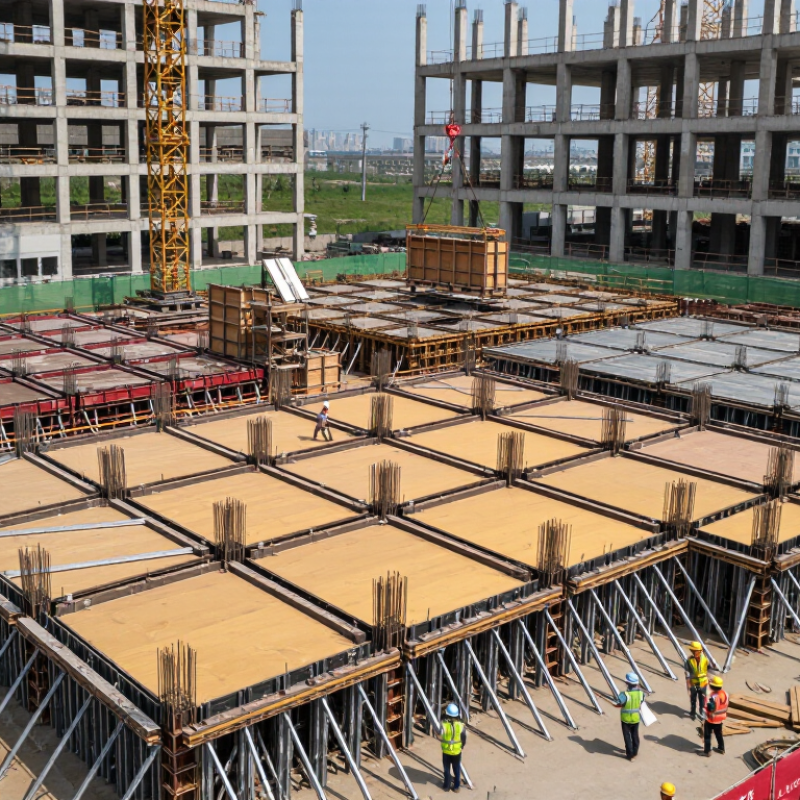
Slab formwork is the temporary platform and support system that shapes a concrete floor until the slab can carry its own weight. It commonly includes deck panels, joists, beams, and adjustable props. The loads travel through these parts into the structure or prepared ground below. It looks simple from above. The hidden support matters.
On site, workers assemble and level the deck, then check joints, edges, and openings before placing reinforcement and concrete. A small gap near a column can leak cement paste; a loose prop may shift under load. Even a neat-looking deck can hide uneven bearing. That detail deserves a second look.
During pouring, concrete is placed in a controlled sequence, while the crew watches for movement, leakage, or unusual deflection. Props and connections should match the system design and site conditions, not guesswork. Removal comes only when the concrete has reached the required strength and the approved procedure allows it. It is easy to focus on speed; perhaps too easy. Temperature, span, and curing conditions can change the timing, so the site team should verify requirements before striking the formwork.
Chinese manufacturers commonly offer several slab-formwork systems: timber or plywood panels, modular steel frames, aluminum panels, plastic panels, and table forms lifted between floors. For beam-and-slab layouts, adjustable props and joists support the deck; drop-head systems can allow early removal of panels while shores remain in place. Each option suits different spans, floor plans, labor skills, and reuse targets. Some projects still need awkward cuts around columns. That is worth planning for.
The GCCA’s 2021 Concrete Future roadmap estimates global concrete use at about 14 billion cubic metres annually. With that scale of use, reusable formwork can matter, but purchase price alone is a poor comparison. Check panel cycle-life claims, connection details, allowable fresh-concrete pressure, and replacement-part availability. ACI 347R-14, Guide to Formwork for Concrete, provides guidance on formwork design and construction; ask suppliers for project-specific load calculations rather than relying on a catalogue table.
Tips: For a small residential floor, compare modular aluminum panels with plywood-and-prop systems. For repeated high-rise floors, table forms may reduce handling time. Request a sample assembly and inspect its joints. Tiny gaps can leak grout. Also verify that stripping and reshoring instructions match the site sequence.
Chinese suppliers commonly offer timber or film-faced plywood, steel, aluminum, and plastic formwork, as well as table or flying-form systems. The chart shows a commonly available concrete-form plywood sheet size; dimensions for other systems vary by product and supplier.
Reference sheet dimensions: 1,220 × 2,440 mm (approximately 4 × 8 ft). Confirm panel dimensions and system specifications with the supplier.
Slab formwork manufacturers operating in China generally include domestic specialist fabricators, integrated construction-equipment producers, and regional metalworking companies. Their products range from steel or aluminum panel systems to timber beams, adjustable props, and large table forms. Some factories focus on standard components, while others modify layouts for projects with irregular columns or changing floor heights. The market is broad.
International suppliers may also operate through China-based production, sourcing, or distribution teams. However, a sales office is not necessarily a manufacturing site. Buyers can ask where panels are made and request recent production photos, inspection records, and sample component measurements. It matters. For example, check the panel’s edge profile, weld consistency, and the prop’s adjustment markings, rather than relying on a catalogue image alone.
A capable manufacturer should explain load assumptions, compatible accessories, delivery schedules, and replacement-part availability in clear terms. Ask how the system handles a typical pour, including beam spacing and stripping sequence. Compare these answers with project drawings and the contractor’s experience. One caution: polished samples do not prove consistent batch quality. Factory checks help, but they take time, and smaller suppliers may have limited documentation. That is worth acknowledging before choosing a supplier.
Chinese slab formwork manufacturers differ more in process control than in brochure claims. A fair comparison starts with drawings, sample panels, and documented inspection records. Check steel thickness at several points, not just at the edge. Look for even welds, straight ribs, and a coating that does not flake around corners. Small defects matter. They can affect panel alignment and create extra work during installation.
Production capability also varies. Some factories handle standard panels efficiently, while others offer stronger engineering support for unusual layouts and connection details. Ask how design changes are reviewed, how dimensional checks are recorded, and whether load-test results match the proposed system. Request a production schedule and inspect packaging details, such as edge guards and moisture protection. These reveal practical discipline. A large workshop does not automatically mean reliable delivery, and a polished sample may not represent every batch. That judgment can be uncomfortable, but it is necessary. Compare evidence from current orders, not promises alone.
A suitable slab formwork manufacturer should prove more than production capacity. Ask for project-specific drawings, load tables, panel specifications, and clear limits for spans and prop spacing. Check whether the proposed system matches your slab thickness, pour sequence, and site access.
McKinsey Global Institute’s 2017 report, Reinventing Construction, found construction labor productivity had grown about 1% annually over two decades, compared with 2.8% across the global economy.
That gap makes practical installation speed and reduced rework worth checking—not just the quoted panel price.
Request material traceability and recent inspection or test records for load-bearing components. Review how the supplier controls dimensions, weld quality, and surface condition; small defects can complicate alignment on site. Ask for a sample shop drawing and examine whether crews can understand it without repeated clarification.
Good support matters. Confirm response times for engineering questions, spare-part availability, packaging, and delivery schedules. A factory visit can reveal how panels are stacked and protected, though one polished visit cannot prove consistent quality.
No supplier is perfect. Compare at least two proposals against the same technical checklist, and record assumptions about reuse cycles, labor, transport, and accessories. Cite the supplier’s stated reuse figures as estimates, unless they are backed by project records under comparable conditions.
JK Machinery a.s.
Psohlavců 322/4, Praha 4,
Czechia
T: +420 777 610 380
E: sale@roll-formingmachinery.com