10 Best Custom Plastic Housing Manufacturers in 2026
Choosing a custom plastic housing manufacturer is rarely just a matter of comparing prices. The right partner must turn drawings, material requirements, and production goals into dependable parts. A small detail can matter: a snap-fit that feels too tight, a screw boss that cracks, or a surface finish that shows fingerprints under bright light. These issues may appear simple, but they can affect assembly, durability, and the user’s first impression.
This 2026 guide introduces ten manufacturers to consider for custom plastic enclosures and housing projects. It focuses on practical factors such as molding capabilities, material selection, design support, quality controls, communication, and production flexibility. Look for clear answers about tolerances, prototype-to-production transitions, inspection methods, and how design changes are handled. A polished website is useful, but it is not proof of consistent manufacturing. Ask for relevant project examples and discuss your requirements directly.
There is no perfect supplier. A company suited to a high-volume electronics enclosure may not fit a low-volume industrial product. Cost matters, but so do lead times, engineering access, and the ability to resolve problems without delay. The comparisons ahead can help narrow the field, not replace careful due diligence. Some details may still need verification with each manufacturer. That is worth doing.
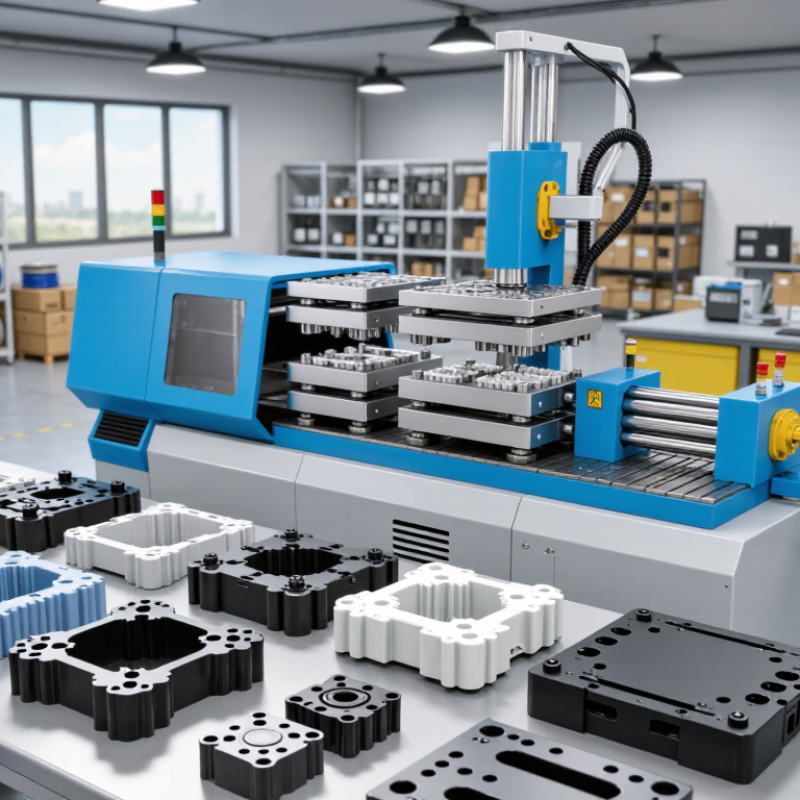
Understanding Custom Plastic Housings and Their Applications
A custom plastic housing is more than a cover. It protects components from dust, impact, moisture, and accidental contact while providing mounting points, ventilation, and access for maintenance. Designers choose resin, wall thickness, and joining methods around the product’s real environment. A handheld sensor may need textured sides for grip; a control box may need sealed cable entries. Details matter.
PlasticsEurope’s Plastics—The Fast Facts 2023 reports global plastics production of 400.3 million tonnes in 2022. That figure spans many sectors, but it highlights how widely plastics support manufactured products. In electronics, housings must leave room for circuit boards, connectors, and heat flow. Equipment used in clinics or workshops may also face frequent cleaning. Fit is unforgiving.
The Global E-waste Monitor 2024 estimates that 62 million tonnes of electronic waste were generated worldwide in 2022; only 22.3% was documented as formally collected and recycled. This is an e-waste figure, not a housing-specific measure. Still, it supports designing enclosures for repair and material separation where practical. Clear resin identification and removable fasteners can help. The first CAD version is rarely the right one; prototypes often reveal awkward cable bends, trapped heat, or screws that are hard to reach. A sleek shell can still be a poor housing if technicians cannot open it.
Custom Plastic Housing Applications: Understanding IP Rating Digits
Ingress Protection (IP) codes defined by IEC 60529 use the first digit for protection against solid objects and dust, and the second for protection against water. The chart compares the digits in example IP ratings; the digits are rating levels, not measurements of protection on a linear scale.
For enclosure design, select a rating based on the actual environment and test requirements. IPX7 and IPX8 immersion conditions differ, and IPX9 addresses high-pressure, high-temperature water jets; verify the specific test conditions for the finished housing.
How to Evaluate Custom Plastic Housing Manufacturers in 2026
Choosing among the 10 best custom plastic housing manufacturers in 2026 takes more than comparing unit prices. Start with the part itself: its dimensions, expected environment, finish, and production volume. A capable manufacturer should ask about these details before recommending a resin or tooling approach. If the quote arrives without questions, pause.
Review experience with comparable housings, not just a polished gallery. Ask how the supplier manages draft angles, wall-thickness changes, snap fits, and visible surfaces. These details can affect molding, assembly, and appearance. Request a sample or first-article inspection report, and check how measurements are taken. Tolerances should reflect the design and material, rather than a blanket promise. Small details matter.
Also examine process controls. Ask how incoming resin, molding conditions, and dimensional checks are recorded. Find out how defects are handled and whether design changes trigger a new review. A practical supplier can explain its inspection steps in plain language and share relevant documentation. Compare tooling ownership, maintenance terms, lead times, and costs for revisions. The lowest quote may leave out important work. No scorecard catches everything. A factory visit or technical call can reveal gaps, though neither guarantees smooth production. Keep notes on unanswered questions; an awkward pause can be useful evidence.
Manufacturing Methods, Materials, and Quality Standards
Custom plastic housings start with a manufacturing method suited to the part’s geometry, volume, and finish. Injection molding supports repeatable production and complex features, but tooling can be costly to change. CNC machining is useful for prototypes or smaller runs, though it may create more material waste. Thermoforming can produce broad, lightweight panels. The choice affects more than price.
Material selection depends on the housing’s actual environment. ABS is commonly used for rigid enclosures, while polycarbonate offers greater impact resistance. PC/ABS blends can balance toughness and processability. Polypropylene suits parts needing chemical resistance, but its flexibility may complicate tight-fitting joints. Small details matter. Wall thickness, ribs, snap fits, and screw bosses should be reviewed together; a design that looks sound on screen may crack during assembly.
Quality checks should match the risks of the application. Measure critical dimensions, inspect surfaces, and test assembled parts for fit, fastening strength, and impact resistance. For outdoor or demanding settings, assess UV exposure, temperature changes, and contact with likely chemicals. Keep material and process records for each production run. Not every test needs to be elaborate, but skipping a simple fit check can be expensive. Tolerances also deserve honest discussion: overly tight limits may raise costs without improving real-world performance.
Profiles of 10 Leading Custom Plastic Housing Manufacturers
The ten profiles represent different strengths in custom plastic housing production, rather than a universal ranking. One manufacturer focuses on high-volume injection molding, where stable cycle times help keep large orders consistent. Another specializes in bridge production, making smaller batches while production tooling is prepared. An overmolding specialist combines a rigid shell with soft-touch grip areas. A tooling-focused supplier works through ribs, bosses, draft angles, and parting lines before cutting steel. Details matter.
Other profiles highlight thin-wall molding, useful for lightweight enclosures, and insert molding, which embeds metal features into plastic parts. A materials-focused shop may offer several resin options and provide datasheets for comparison. A finishing specialist handles molded texture, gloss, and color matching, where small surface differences can stand out under bright light. An assembly-oriented manufacturer adds gaskets, fasteners, or simple wiring, reducing handoffs between suppliers. Fit comes first.
The final profile centers on engineering prototypes, using early samples to reveal awkward clips or uneven wall thickness before a full run. These distinctions help buyers match a supplier’s actual capabilities to the housing design. Ask for comparable project examples, stated tolerances, tooling ownership terms, and inspection records. A polished sample is useful, but it cannot prove repeatability by itself. The comparison is not perfect: capability descriptions vary, and a promising process still needs validation against the specific part, resin, and finish.
Comparing Suppliers for Your Project Requirements
Choosing among the 10 best custom plastic housing manufacturers in 2026 means matching capabilities to the part, not just comparing unit prices. PlasticsEurope’s Plastics—The Fast Facts 2024 reports global plastics production of 413.8 million tonnes in 2023. That scale makes material selection and supply consistency important questions. Ask suppliers to identify resin grades, document material batches, and explain how they control wall thickness around bosses, ribs, and screw posts. Small details matter. Request a tooling plan, tolerance data, and sample parts made with the proposed production process. A polished prototype may hide problems that appear only after repeated molding.
Sustainability also deserves a practical check. The OECD’s Global Plastics Outlook reports that 353 million tonnes of plastic waste were generated worldwide in 2019, and only 9% was recycled. For housings, ask whether recycled resin suits the required finish, strength, and operating environment; do not assume it will. Compare suppliers on design-for-manufacturing feedback, testing access, lead times, and change-control practices. One caveat: a comparison spreadsheet cannot show how clearly a supplier flags a risky feature. Ask for a specific example, such as a thin corner that could warp, and how the design or process would address it. A low quote can still carry expensive tooling revisions.


